Canyonlands never closes. The park is open 24 hours a day, year-round, with no timed-entry reservation, so the only real decision is which month earns your vacation days. For most people that's late April through May or mid-September through October, when daytime highs sit in the 60s–80s and every visitor center, ranger talk, and campground is running full tilt. But the park changes character so much between January and July that the right answer depends on what you're coming for.
This guide breaks the decision down with real numbers: official climate averages, 2024 monthly visitation, seasonal prices in Moab, and the event weeks that quietly double the crowds. By the end you should have dates picked.
Quick Answer: The Best (and Worst) Times to Visit Canyonlands
Go in April–May or mid-September–October if you want the classic Canyonlands: comfortable hiking, wildflowers or golden cottonwoods, and every service open. Those are also the busiest stretches, though "busy" here is relative. Canyonlands recorded about 818,000 recreation visits in 2024, roughly half of what neighboring Arches pulls, making it the least-visited of Utah's five national parks. You'll share Island in the Sky's overlooks with a modest crowd, not a procession.
For solitude at a fair price, aim at early March or November. Days are cooler, the Needles and Island in the Sky trailheads rarely fill, and Moab's rates drop well off their spring peak. December through February is the deep bargain — with trade-offs I'll get to.
The worst window is late June through August, when July afternoons average 100°F and often exceed it, and monsoon storms stack flash-flood risk on top of the heat. The other date to think hard about is Easter week, when the Easter Jeep Safari fills Moab with thousands of off-roaders and lodging prices spike accordingly. One bright spot: unlike Arches, Canyonlands has no timed-entry system, so you never need a reservation just to get in the gate.
Canyonlands Climate and Crowds, Month by Month
Canyonlands is a high-desert park, and elevation explains nearly everything about its weather. The Island in the Sky mesa top sits at 5,930 feet; the Needles district averages about 5,000. Thin, dry air means the temperature swings hard between day and night in every season — a 100°F July afternoon can cool into the high 60s after dark, and a 60-degree March afternoon can drop below freezing by morning. Pack layers no matter when you come.
Rain is scarce: about nine inches a year, most of it falling in the July–September monsoon, with July (1.02 inches) and October (1.21 inches) the wettest months on the park's climate averages. The table below pulls those averages together with a reality check on crowds. Use the six anchor months as decision points — the months between them slide predictably.
| Month | Avg High (°F) | Avg Low (°F) | Best For |
|---|---|---|---|
| January | 44 | 22 | Solitude — 6,055 visits in 2024, the year's quietest — and frost on the red rock |
| March | 64 | 35 | Shoulder-season value, first wildflowers, thin crowds |
| May | 82 | 51 | Best hiking weather, but the busiest month (120,011 visits in 2024) |
| July | 100 | 67 | Dawn hikes, river trips, overlook drives — nothing midday |
| September | 88 | 55 | Prime hiking on the second-busiest stretch of the year |
| November | 56 | 30 | Quiet trails, golden cottonwoods, cheap rooms |
Two things to read out of that data. First, the crowd curve is steep: May 2024 was roughly twenty times busier than January, and April and September trail only May. Second, even the peak feels manageable. A hundred thousand visits spread across a 337,598-acre park whose districts sit two-plus hours apart by road never congeals into an Arches-style line — the crunch shows up mainly at Mesa Arch at sunrise and in the campgrounds.
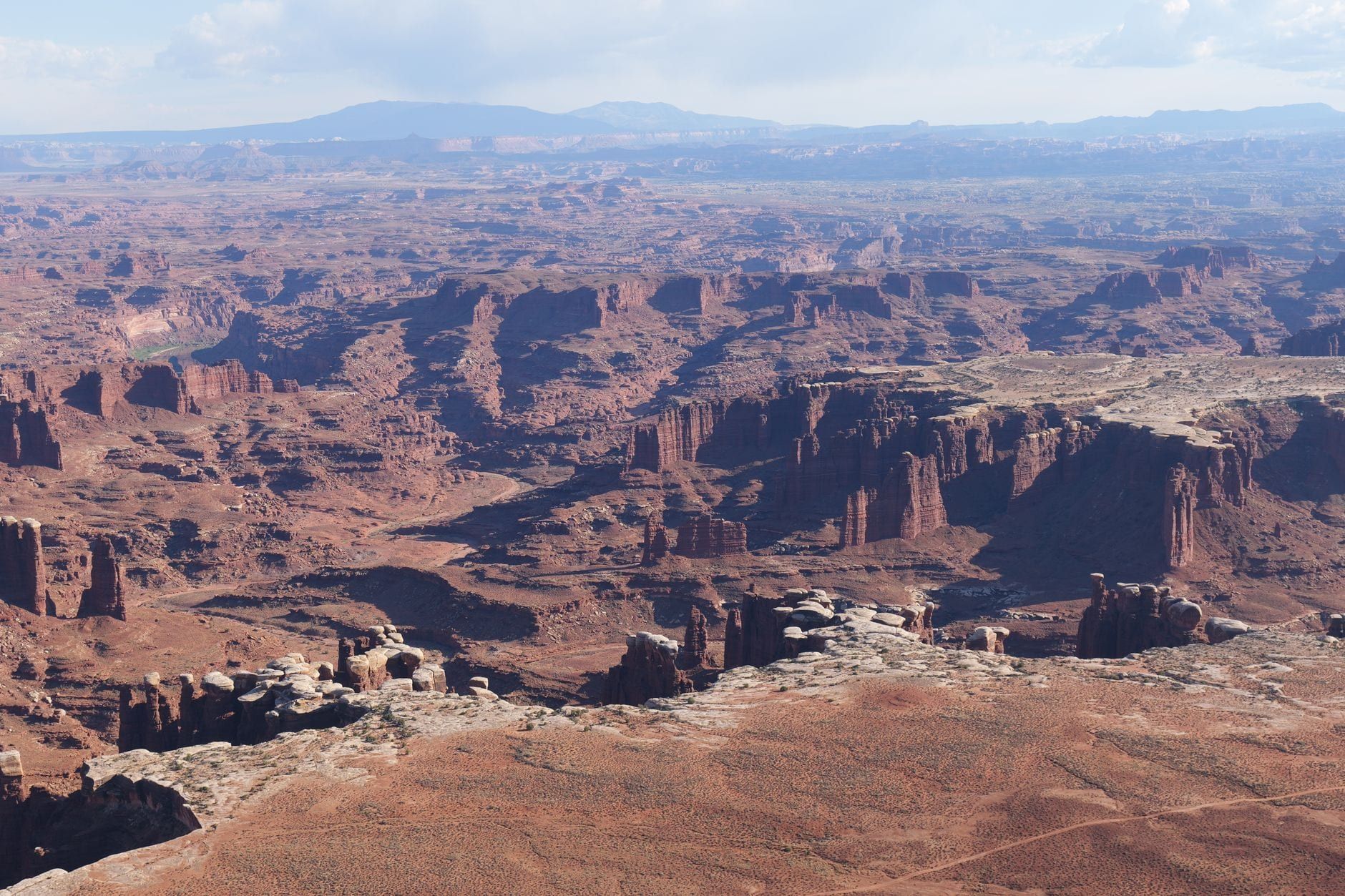
That size matters for planning. Island in the Sky, the Needles, the Maze, and the river districts share a boundary but no roads; you can't hop between them for an afternoon. Most visitors base at one district per day and never see the others, which is one reason the crowds stay diluted.
Season-by-Season Planner: Spring, Summer, Fall, Winter
Each season below ends with a one-line verdict, because the honest answer to "when should I go" is always "it depends on what you want to do out there."
Spring (March–May)
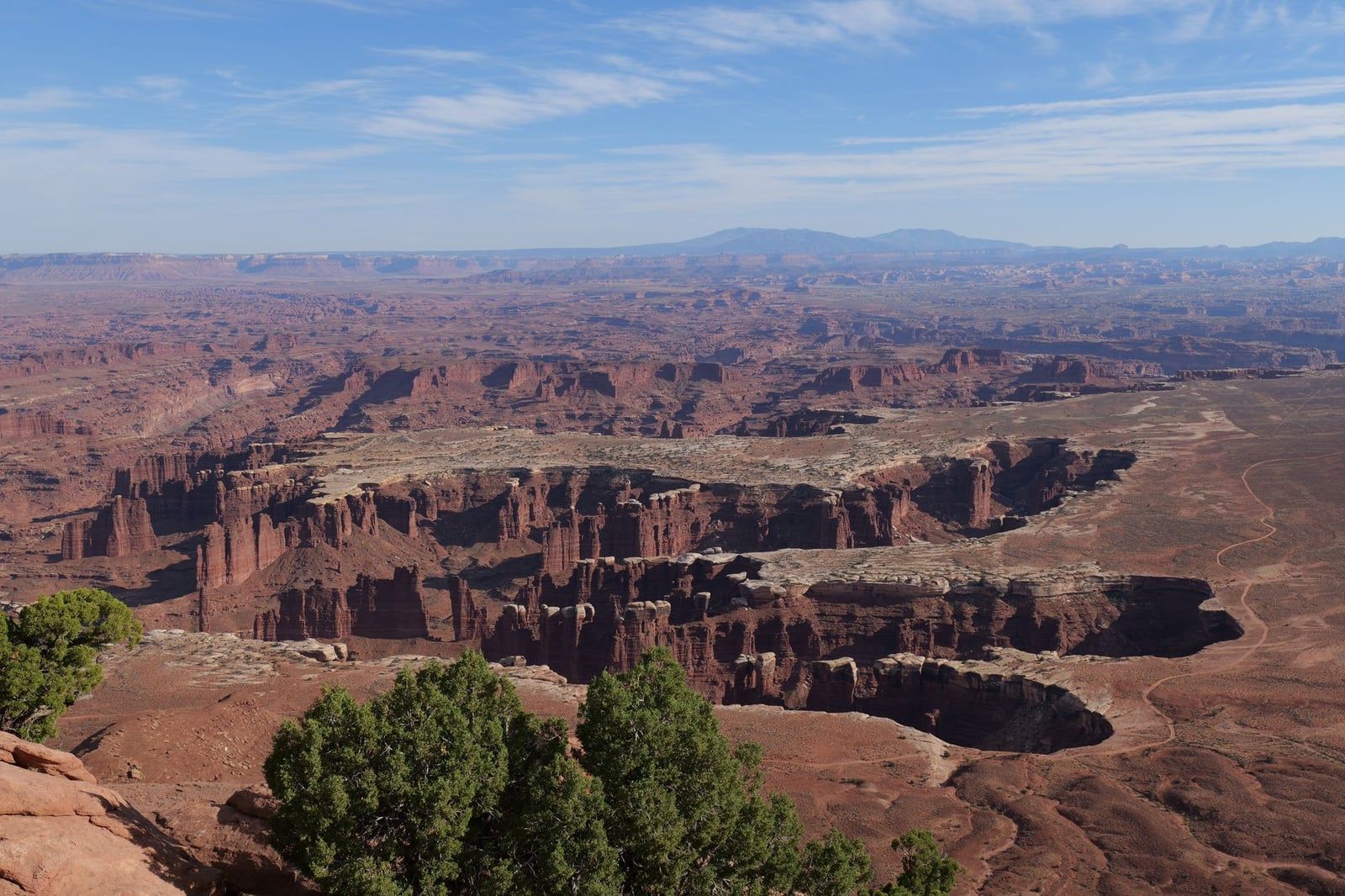
Highs climb from the mid-60s in March to the 80s by May, and the desert answers: cacti and wildflowers bloom through spring with a peak around May, while the La Sal Mountains hold their snow as a backdrop to every overlook. April and May are historically the park's busiest months — expect parking crunches at popular Island in the Sky trailheads on spring and holiday weekends, and know that both campgrounds often fill by mid-morning. Spring weather also swings; a warm morning can turn into a windy, cold afternoon, so check the forecast the night before.
It's the season to pick a real trail, not just an overlook, and the season to plan far ahead: backcountry campsite reservations open up to four months in advance, and the popular summer blocks (White Rim, river trips) release on set calendar dates — summer permits opened February 10 in a recent cycle. If you're eyeing a May White Rim trip, you're booking in January.
Pick spring if you want the year's best combination of hiking weather and full services, and don't mind sharing the mesa.
Summer (June–August)
July averages a 100°F high and often tops it; the record is 116°F. Plan your days around the heat rather than fighting it: hike before 10 a.m., carry more water than feels reasonable, and give the 11 a.m.–3 p.m. window to the paved Island in the Sky scenic drive and its overlooks, where you're never more than a few minutes from an air-conditioned car. Heat illness is a genuine risk here — rangers across Arches and Canyonlands have handled dozens of heat-related rescues in a single summer — and shade on the trails is close to nonexistent.
The July–September monsoon adds afternoon thunderstorms and flash-flood danger in washes and low spots, so keep an eye on the sky and never enter a flooded crossing. The compensation is real: this is the season for Cataract Canyon rafting (big water runs roughly early May to late June), ranger geology talks at Grand View Point, and evenings warm enough to linger outside long after sunset.
Pick summer if you're rafting, touring overlooks by car, or pairing the park with a river trip — and start every hike at dawn.
Fall (September–October)
September days still run near 90°F, then cool through the 70s and lower in October — the most forgiving hiking weather of the year. Visitation forms the year's second peak in September before falling off a cliff in November. Along the Green and Colorado rivers, Fremont cottonwoods turn gold, and the flatwater floats on both rivers suit a lazy autumn day in a way the summer's big water never did.
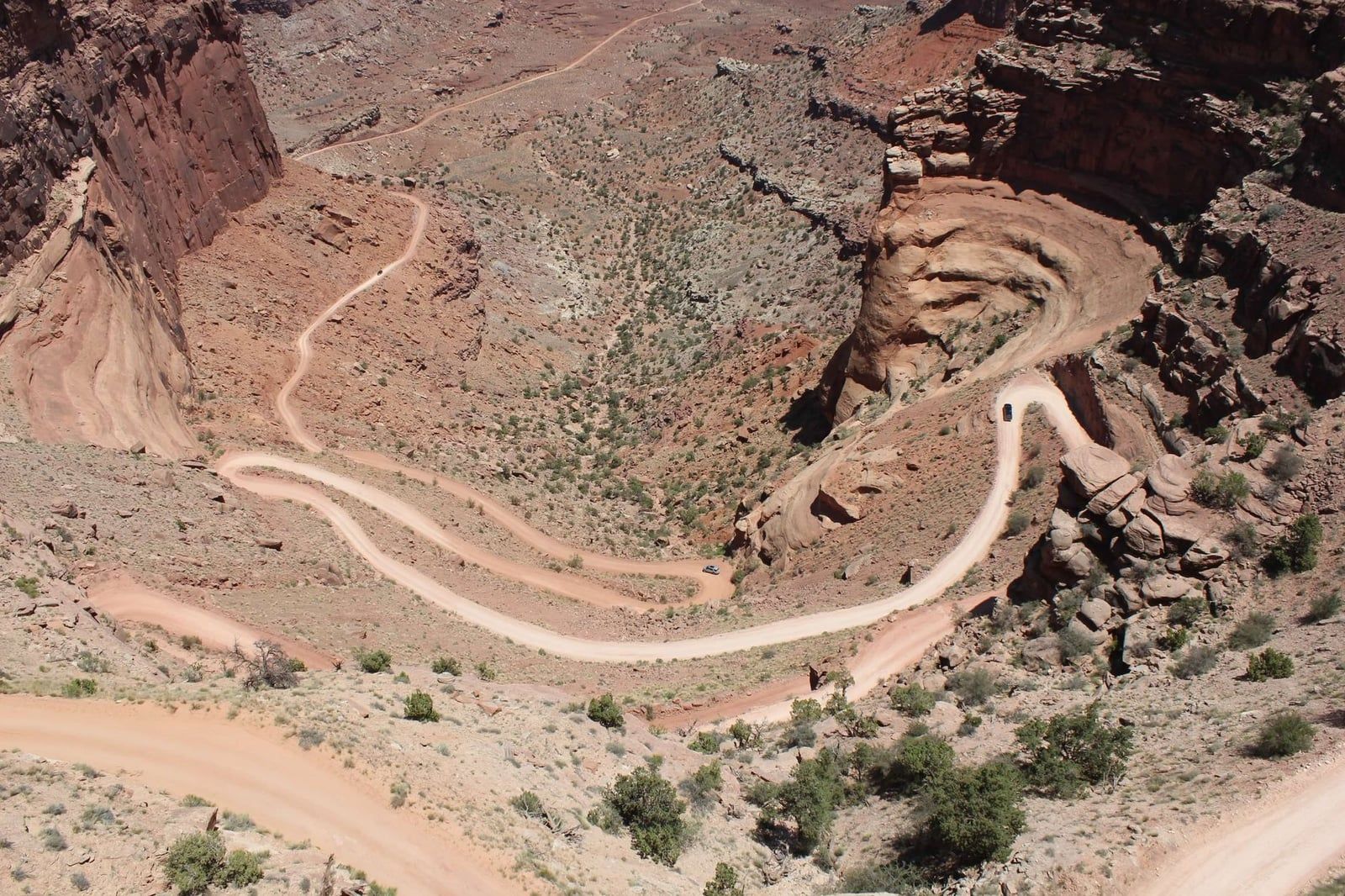
Fall is also White Rim Road season. The 99-mile loop around the White Rim bench needs a high-clearance four-wheel-drive with low range, a day-use or overnight permit, and dry conditions — check the park's road conditions page before committing, because a storm can close the dirt sections. One more fall note: black bears move through the Needles backcountry, and the park requires bear canisters in certain zones. If you're heading to the Needles with a backpack, read the permit details before you pack.
Pick fall if you want the year's steadiest weather, river time, or a 4WD expedition — and book campsites early, since fall fills nearly as fast as spring.
Winter (November–February)
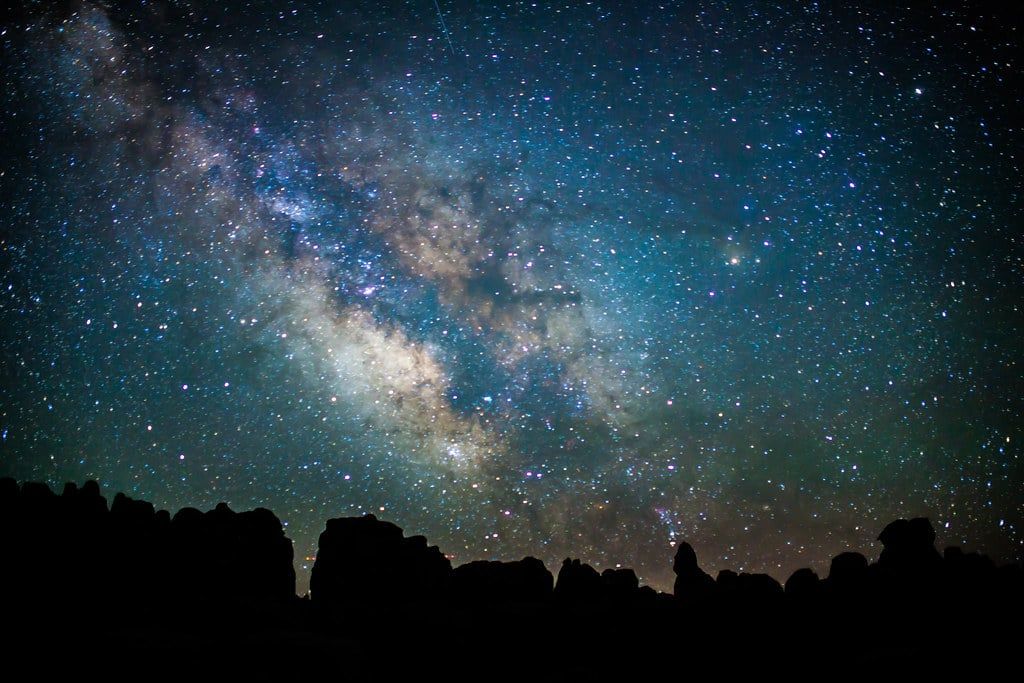
Highs average 30–50°F and lows 0–20°F. Large snowfalls are uncommon, but even a dusting of snow or ice can make slickrock trails and unpaved roads impassable — the park says so plainly on its winter page, and it's the single biggest winter risk. The payoff is the emptiest park you'll ever walk through, plus stargazing that starts at dinnertime: Canyonlands is an International Dark Sky Park, and winter's early sunsets mean you can watch the Milky Way rise and still be in bed by nine.
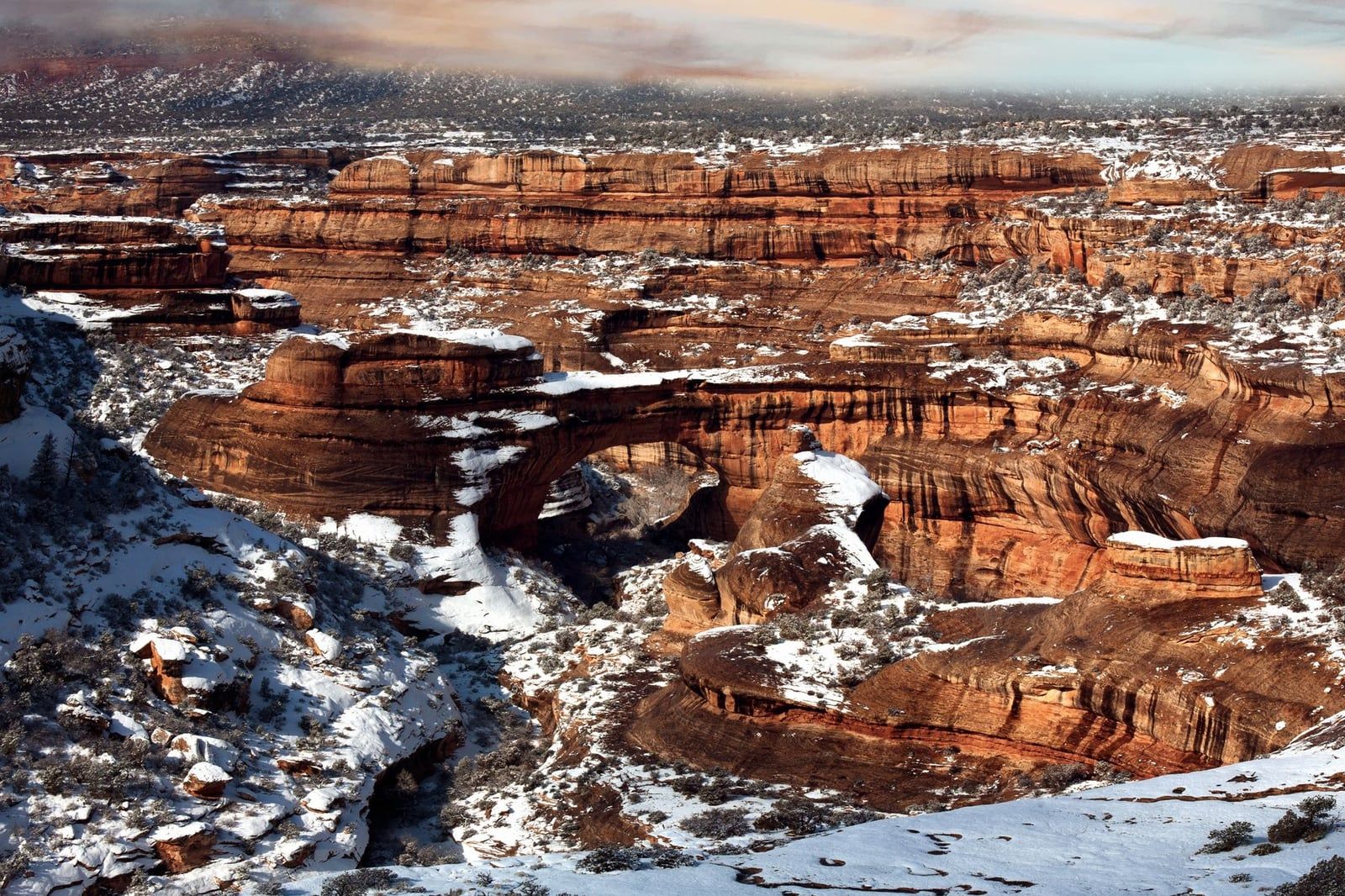
A dusting of snow on Mesa Arch is a photographer's trophy — red rock, white rim, and a glow under the arch that most visitors never see. Bring traction for your boots, check road conditions the morning you drive in, and fuel up in Moab, because the island's only water source is the visitor center and its hours shrink in winter.
Pick winter if you want solitude and night skies above all, and you're flexible enough to reroute when ice closes a road.
Crowds and Costs: The Cheapest and Quietest Times to Go
The money math tracks the crowd curve almost perfectly. In December–February, a Moab hotel room that runs about $110 in summer can drop to around $35, and flights into the region's airports run $100–200 cheaper than at peak. That's the cheapest time to go, full stop. The catch: some Moab businesses close for winter, days are short, and you need a backup plan for icy roads.
Spring and summer are the expensive end — lodging, rentals, and flights all spike with demand, and event weekends push prices higher still. The quiet-but-pleasant compromise is March and November: comfortable enough for real hiking, cheap enough to feel like a deal, and thin enough at the trailheads that you won't circle a parking lot.
Booking pressure concentrates on spring weekends, holiday weekends, and event weeks — more on those below. If your dates are locked to a busy stretch, reserve lodging early and remember the drive from Moab is short enough that staying in Monticello or Green River can undercut Moab's rates on the same weekend.
Best Time of Day: Sunrise at Mesa Arch, Midday Heat, and Golden Hour
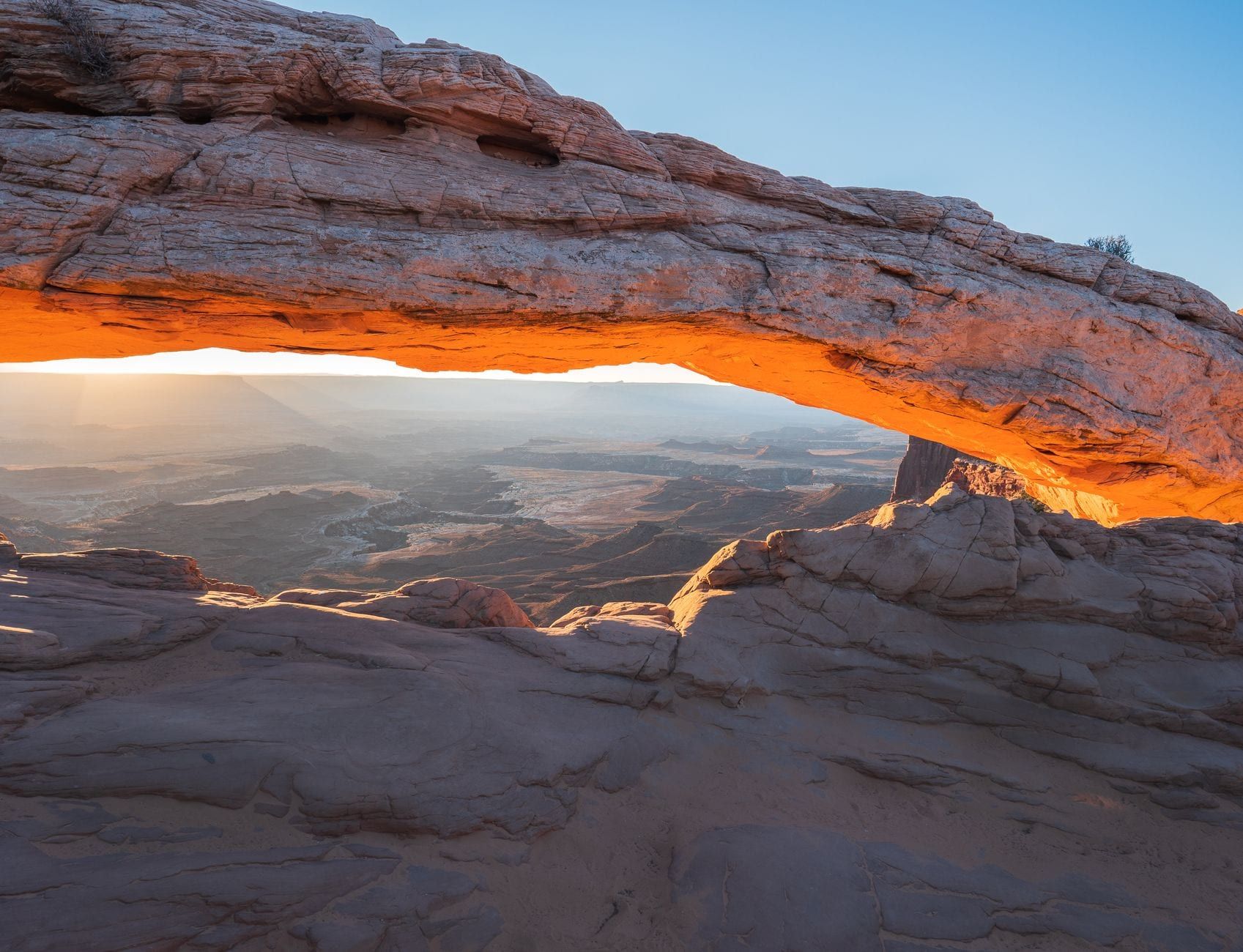
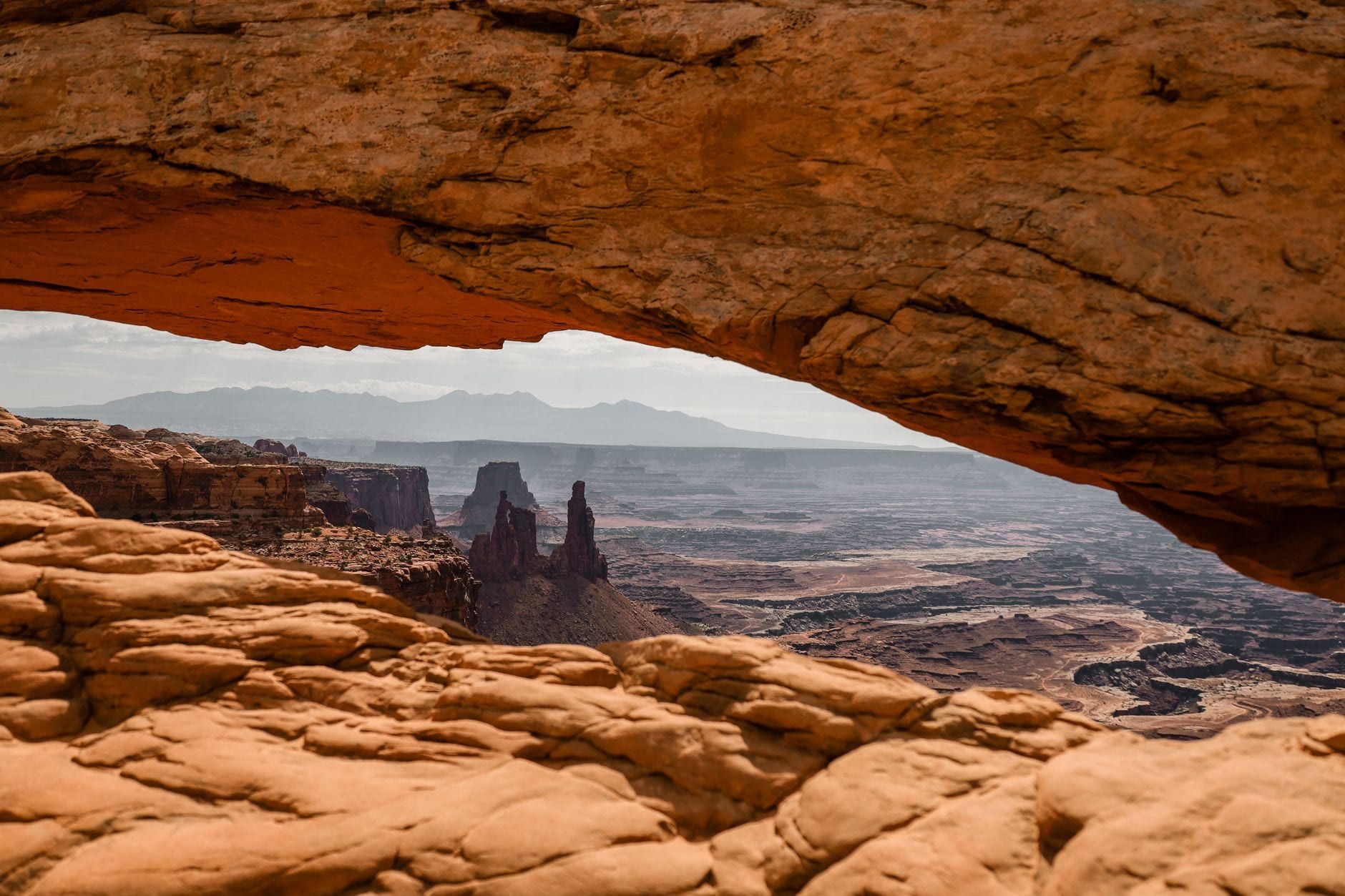
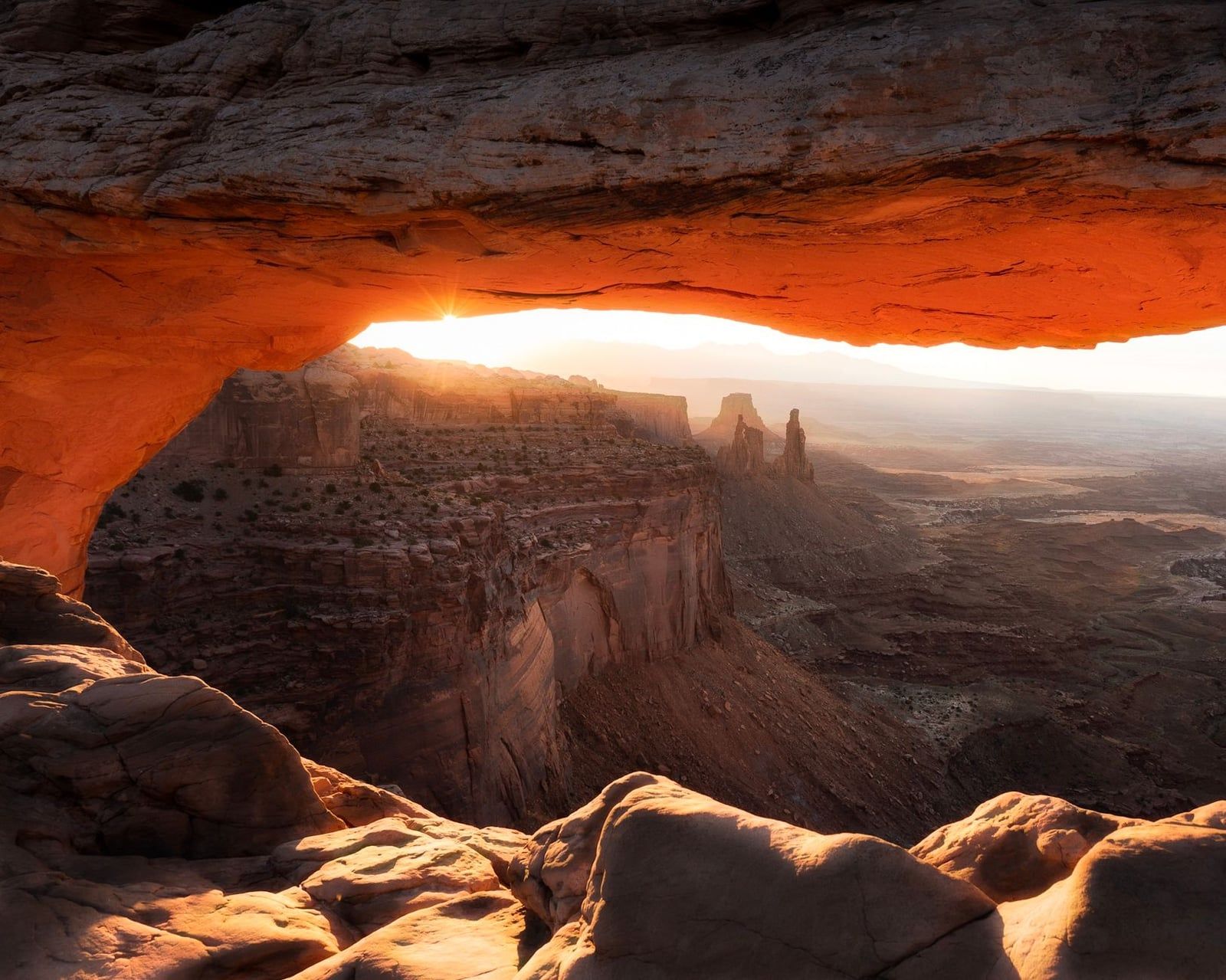
Mesa Arch is the park's signature photograph, and sunrise is when it earns that reputation: the 90-plus-foot span on the Island in the Sky canyon rim glows burnt orange from below as the first light bounces off the cliff face. Everyone knows it, which is the problem. Crowds peak April–June and September–October, and on those mornings you'll want to be in the parking lot at least 45 minutes before sunrise to claim a rim spot. Tripods multiply fast.
From November through March, the calculus flips. You may have the arch nearly to yourself, occasionally with snow on the rock. A 6 a.m. alarm in January buys you the shot that April visitors wait in line for — the trade is frozen fingers and a sunrise that doesn't arrive until after 7.
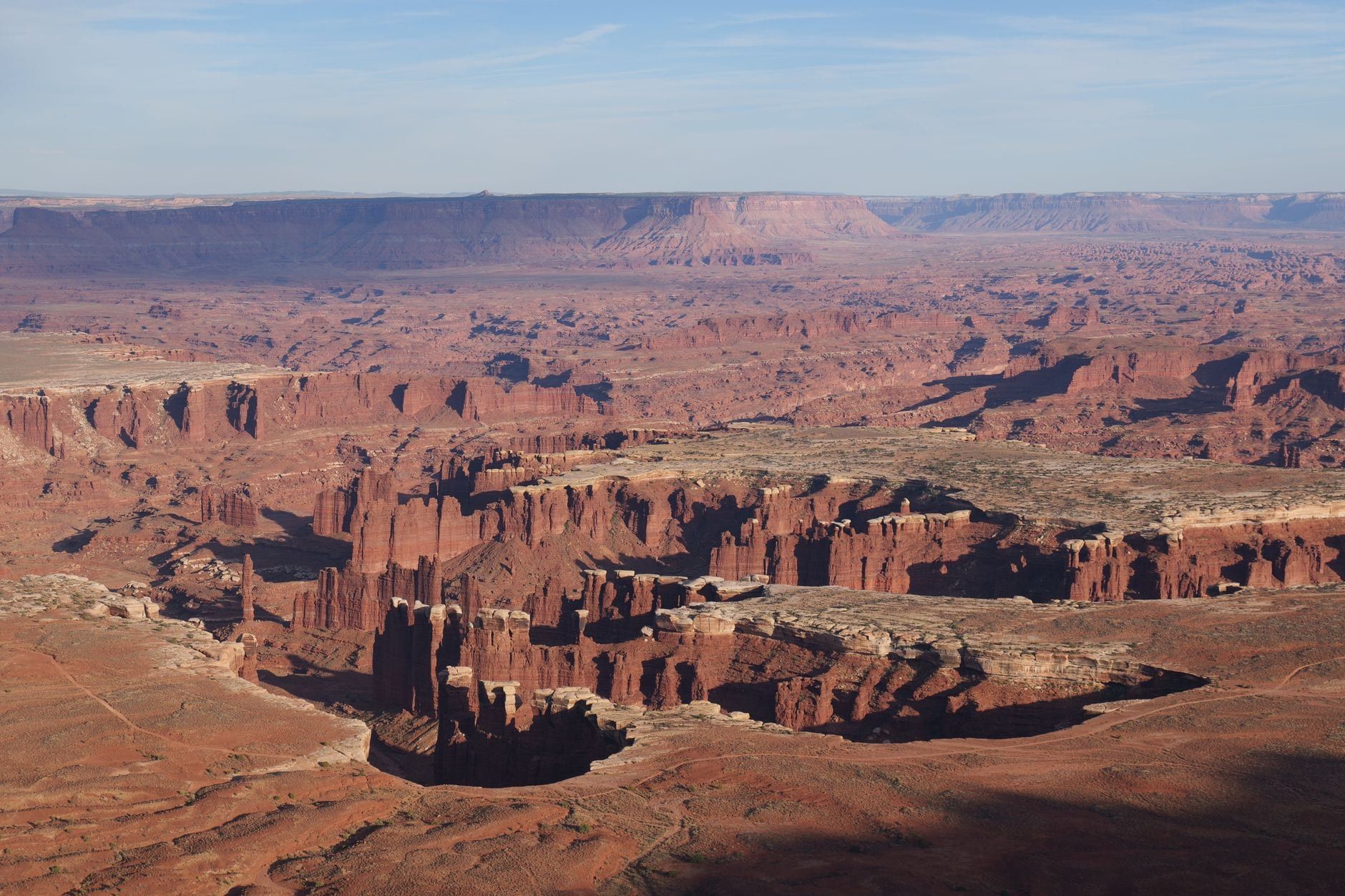
Midday, from about 11 a.m. to 3 p.m., is drive-and-look time. In summer especially, skip exposed hiking and work the overlooks: Grand View Point, Green River Overlook, and Shafer Canyon Overlook are all steps from the car. Late afternoon is the photographer's other sweet spot, when long shadows rake across the canyons and the sandstone warms up — Grand View Point at golden hour arguably beats the midday view by a mile. Stay past dark and the park's International Dark Sky designation takes over; just don't use artificial light to illuminate the landscape, which the park prohibits.
What's Open When: Seasonal Services, Closures, and Road Conditions
The basics don't change: the park is open 24/7 year-round, entry costs $30 per vehicle for a 7-day pass, and no reservation or timed entry is required — a meaningful contrast with Arches next door. Full hours and fee details are worth a look before you go, but the seasonal shifts are what matter for picking dates.
Visitor centers are the main moving part. Island in the Sky's runs on limited winter hours from roughly January through early March — in a recent schedule, 9 a.m.–4 p.m. with some closed weekdays — and it's the district's only water source, so fill bottles whenever you pass it. The Needles visitor center closes entirely from late November to early February; the Hans Flat Ranger Station in the Maze stays open daily all year. Ranger programs and guided hikes pause for winter and run spring through fall.
Both developed campgrounds stay open year-round. Island in the Sky's Willow Flat (12 sites, $15/night) is entirely first-come, first-served and fills early in spring and fall; at the Needles (26 sites, $20/night, running water), some sites are reservable up to six months ahead on Recreation.gov. Permits follow their own calendar: overnight backcountry and river permits open no more than four months in advance, and day-use permits for the White Rim, Elephant Hill, Lavender Canyon, and Peekaboo/Horse Canyon roads go on sale at 8 a.m. mountain time the day before — or free at a visitor center the day of.
Road conditions are the last checkbox. Snow and ice close dirt roads in winter; monsoon storms flood them in summer. Before any trip that involves unpaved routes — or a winter trip at all — check the park's current road conditions page, because a "closed" sign on the White Rim can end a four-month-old plan in a minute.
Moab Events and the Weeks to Avoid (or Plan Around)
A handful of Moab-area events move crowds and prices enough to matter. The big one: Easter Jeep Safari, held every Easter week in April, draws thousands of off-roaders from around the world. If your image of the trip is silence at an overlook, book a different week. If you love 4WD culture, lean in — just reserve lodging months ahead.
The rest of the calendar, in order: the Arches Ultra trail race in January, the Moab Music Festival's Winterlude in February, the Canyonlands Half Marathon in March, the Moab Arts Festival in May, the Moab Music Festival in August, the Moab Folk Festival in November, and a holiday craft fair in December. Add a free summer concert series and the usual holiday-weekend surges.
The pattern is simple — event weekends fill Moab's hotels and lift rates, whether or not the event has anything to do with the park. Check the town's event calendar when you pick your dates, then either book well early or slide your trip a week to one side. Race weekends in particular can make a quiet March feel like May.
FAQs: Canyonlands Timing Questions
What is the best month to visit Canyonlands National Park?
April–May and mid-September–October give the best mix of hiking weather and open services. Note that May is actually the busiest month (120,011 visits in 2024, versus 6,055 in January); early March and November are the sweet spot for solitude with workable weather.
Does Canyonlands require reservations or timed entry?
No. Unlike Arches, Canyonlands has no timed-entry or reservation system, and the park is open 24 hours a day year-round. Entrance is $30 per vehicle for 7 days; permits are only needed for backcountry overnights, river trips, and day use of 4WD roads like White Rim and Elephant Hill.
Is Canyonlands worth visiting in winter?
Yes, if solitude and stargazing rank high for you. Highs average 30–50°F and lows 0–20°F, crowds are minimal, and light snow on the red rock is photogenic. The trade-offs: icy trails and impassable dirt roads, plus the Needles visitor center closes from late November to early February.
When is sunrise at Mesa Arch least crowded?
November–March, when you may have the arch nearly to yourself, sometimes with snow on the rock. Crowds peak April–June and September–October; in those months arrive at least 45 minutes before sunrise to get a rim spot.
How hot does Canyonlands get in summer?
July averages a 100°F high and often exceeds it, and July–September monsoon afternoons add thunderstorm and flash-flood risk. Hike before 10 a.m., carry more water than you think you need, and save overlook drives and air-conditioned time for midday.
What is the cheapest time to visit Canyonlands?
December–February. A Moab hotel room that runs about $110 in summer drops to roughly $35, and flights into the region are $100–200 cheaper than at peak. Expect some Moab businesses to be closed for the season.
How many days do you need in Canyonlands?
One day covers Island in the Sky's overlooks and Mesa Arch; two days let you add the Needles. The Maze and river trips are multi-day expeditions for experienced groups. Pairing the park with Arches, about 40 minutes from Moab, is the classic plan.