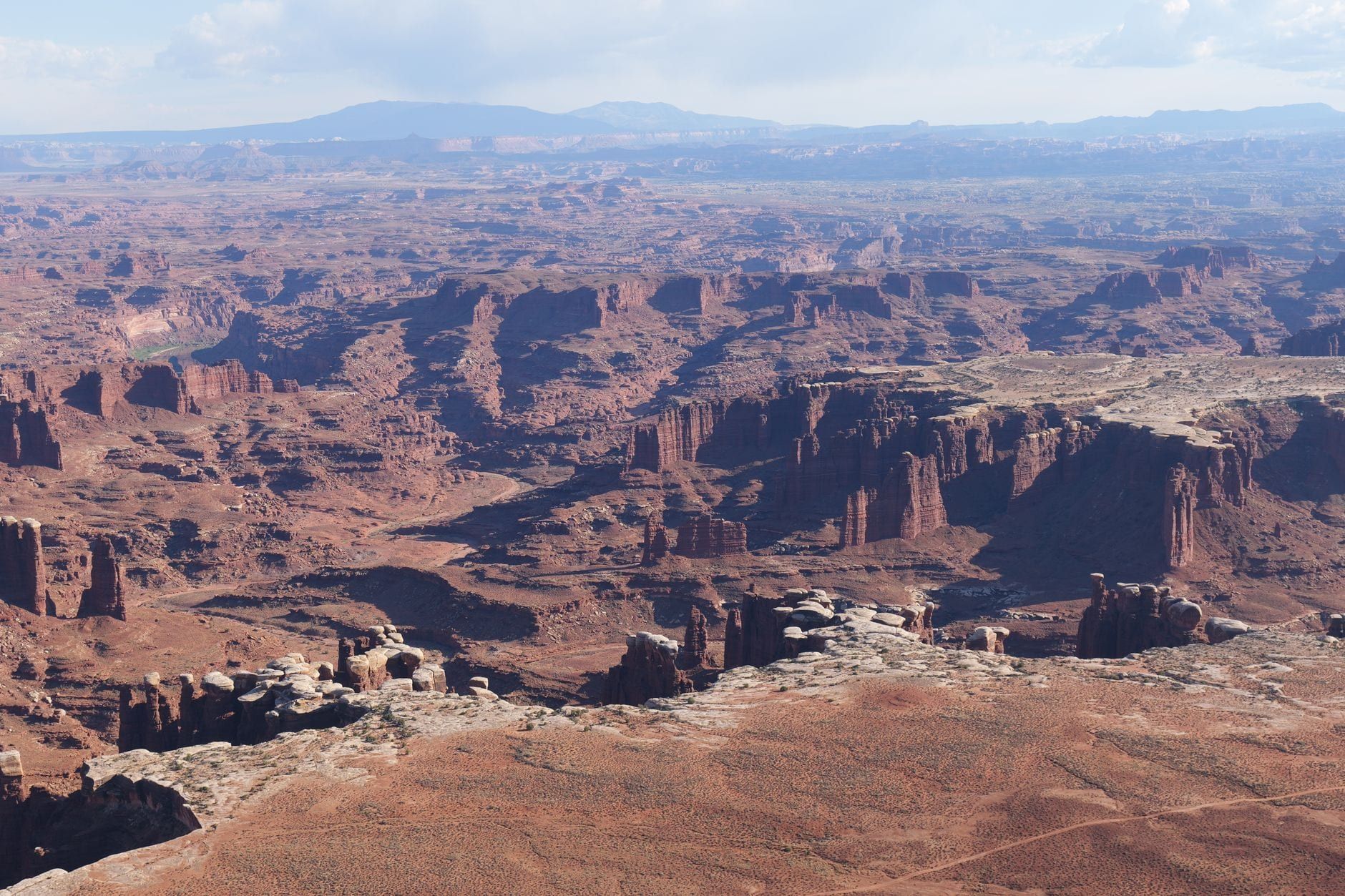
Both parks sit on the Colorado River and both deliver world-class canyon scenery, but they answer different questions. The Grand Canyon is one gorge, a mile deep and 277 river miles long, and it is the single most famous view in the American Southwest. Canyonlands is a 337,598-acre labyrinth of canyons, mesas, buttes, fins and spires wrapped around the spot where the Green River joins the Colorado — quieter, stranger, and far easier to have to yourself.
If this is your first canyon, or you're traveling with people who want the view they've seen in photographs their whole lives, go to the Grand Canyon South Rim. If you want solitude, varied overlooks, or a 4WD and mountain-bike adventure below the rim, go to Canyonlands' Island in the Sky. Families with young kids and photographers chasing empty horizons also land on the Canyonlands side of that line.
You can also do both — as a road trip, never as a day trip. Island in the Sky is about 358 miles (six hours) from the Grand Canyon South Rim; The Needles is closer, around 320 miles and 5.5 hours. Chain them together with Monument Valley or Page in between and the drive becomes part of the point.
Canyonlands vs Grand Canyon: The Short Answer
The defaults, in short: first-timers and bucket-listers take the Grand Canyon South Rim; solitude seekers, photographers, and 4WD or mountain-bike travelers take Canyonlands. Both parks are Dark Sky Parks, both are best from the rim, and both share the same river. The decision comes down to four factors — how much time you have, where you're flying in, how many people you can tolerate at an overlook, and what season it is — and the rest of this article works through each one.
Canyonlands vs Grand Canyon at a Glance: Stats Compared
Here are the numbers people actually compare, on one screen. Full fee and hours details for Canyonlands are worth a look before you commit to dates.
| Attribute | Canyonlands | Grand Canyon |
|---|---|---|
| Size | 337,598 acres (Utah's largest park) | 1,218,375 acres — about 3.6 times larger |
| Canyon scale | Labyrinth of canyons, mesas, buttes, fins, arches, spires | 277 river miles long, averaging 4,000 ft deep, up to 18 miles wide |
| Entrance fee | $30 per vehicle (7 days) | $35 per vehicle, plus $100 per person for non-US residents |
| Annual visitation | ~796,000 | ~4.4 million |
| Winter access | Open 24/7 year-round, no timed entry | South Rim open (4–5 ft of snow a year); North Rim roads closed Dec 1–May 14 |
| Below-rim access | By 4WD on the 99-mile White Rim Road (permit required) | On foot or by mule only |
Two fee details change the math. The Grand Canyon charges non-US residents an extra $100 per person on top of the $35 vehicle fee, so an international family of four pays $435 to enter. And an $80 America the Beautiful pass covers both parks plus every other federal recreation site, paying for itself once you hit a third NPS stop on the trip.
The parks also match on paper where you'd least expect it: both are designated International Dark Sky Parks, so stargazing is superb either way. Where they differ is infrastructure. The Grand Canyon has in-park lodging, a village, and a free shuttle system; Canyonlands has no lodging, no gas, no food, and two small campgrounds. Bigger isn't automatically better here — the two parks reward different travel styles, and the rest of this article explains exactly how.
Landscape and Scale: One Epic Gorge vs a Labyrinth of Canyons
The Grand Canyon is one continuous chasm: 277 river miles long, averaging 4,000 feet deep for its entire length, bottoming out at 6,000 feet and stretching up to 18 miles rim to rim. Those numbers don't register until you stand on the edge. The far rim is a horizon; the Colorado River at the bottom is a brown thread you have to squint for.
Canyonlands spreads differently. The Green and Colorado rivers meet near the park's center and split it into four districts — Island in the Sky, The Needles, The Maze, and the river corridors — with no roads crossing the rivers between them. On the map the districts sit close together; on the ground they're two to six hours apart by car, which is why most visitors see only one per trip.
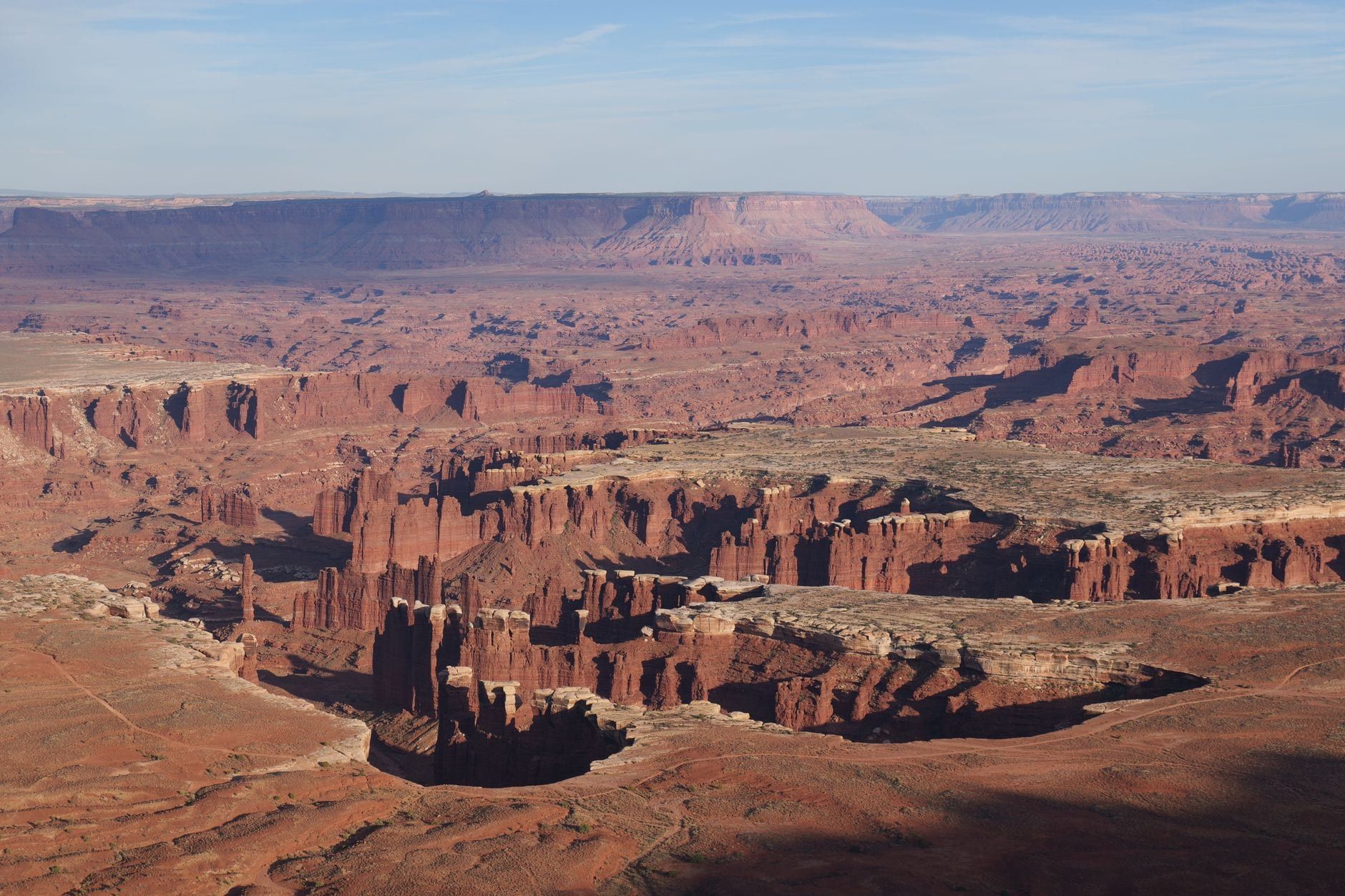
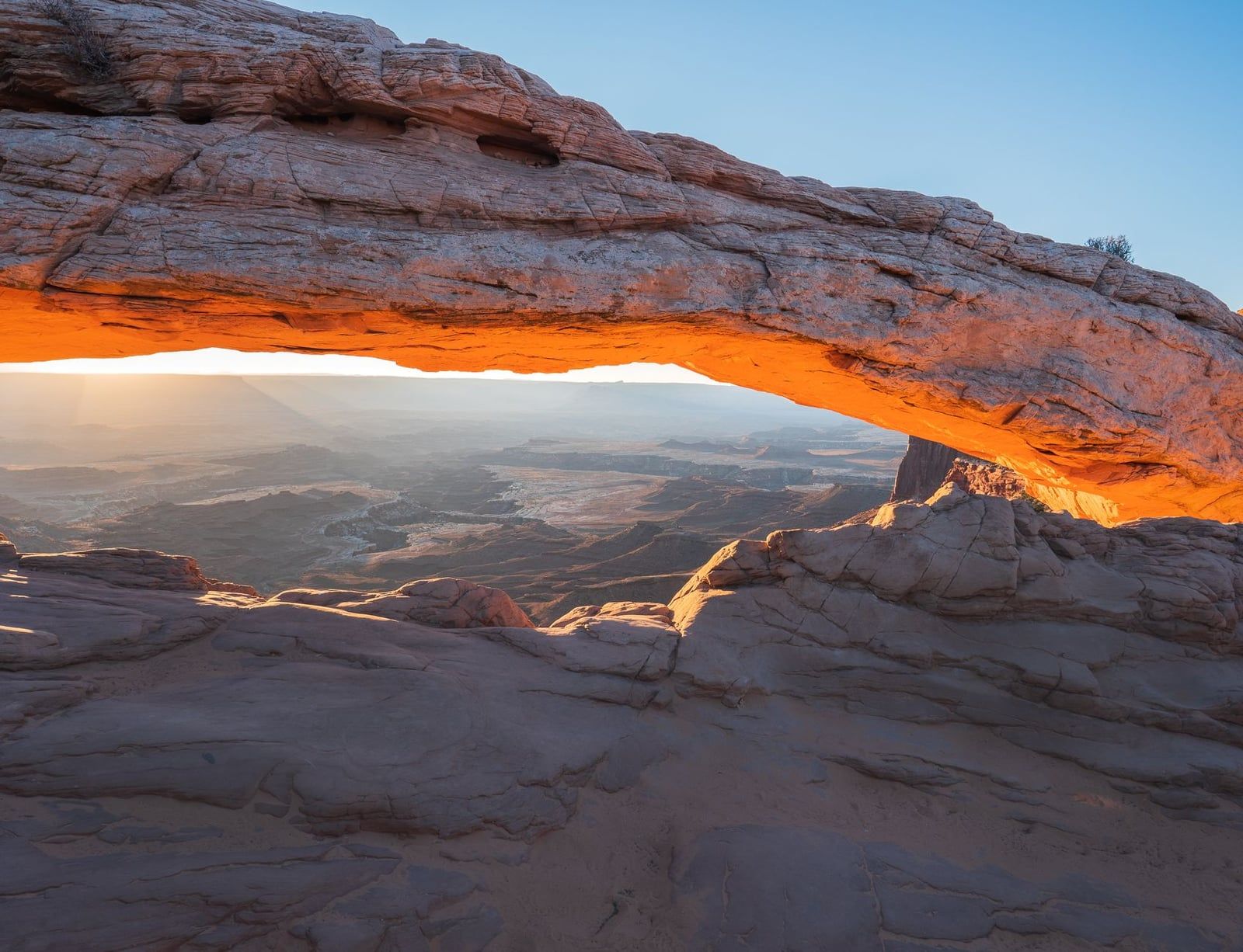
The views reflect that split. At the Grand Canyon you look across layered gorge walls, one immense staircase of rock. At Canyonlands you stand on a flat mesa top at 5,930 feet and get wide panoramas of canyons, buttes and distant fins, with the La Sal Mountains rising behind them — every overlook frames a different kind of formation instead of a bigger slice of the same one.
On sheer size the Grand Canyon wins, and it isn't close: 1,218,375 acres against 337,598. On variety from a single viewpoint, Canyonlands wins, because a single panorama there can hold canyons, mesas, buttes, fins, arches and spires. If you want depth, go south; if you want variety, stay in Utah. Hikers who want the full Canyonlands backcountry picture usually head for The Needles, the district built for it.
Views and Overlooks: Scenic Drives and Going Below the Rim
This is where the two parks diverge most in practice, because it decides what your day actually looks like: a driving loop between pullouts, or a shuttle-and-overlook system with one giant subject.
Island in the Sky's mesa-top drive
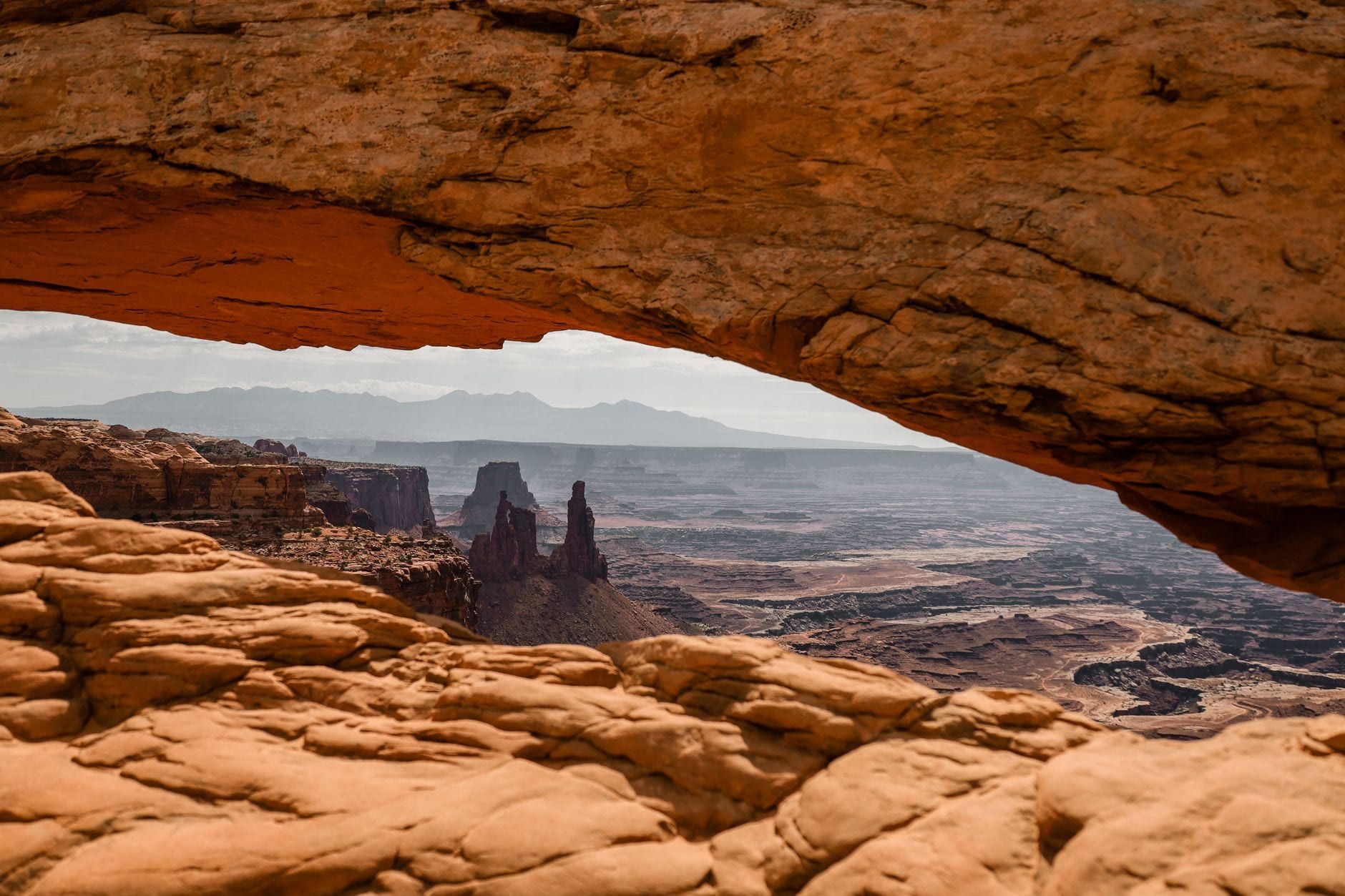
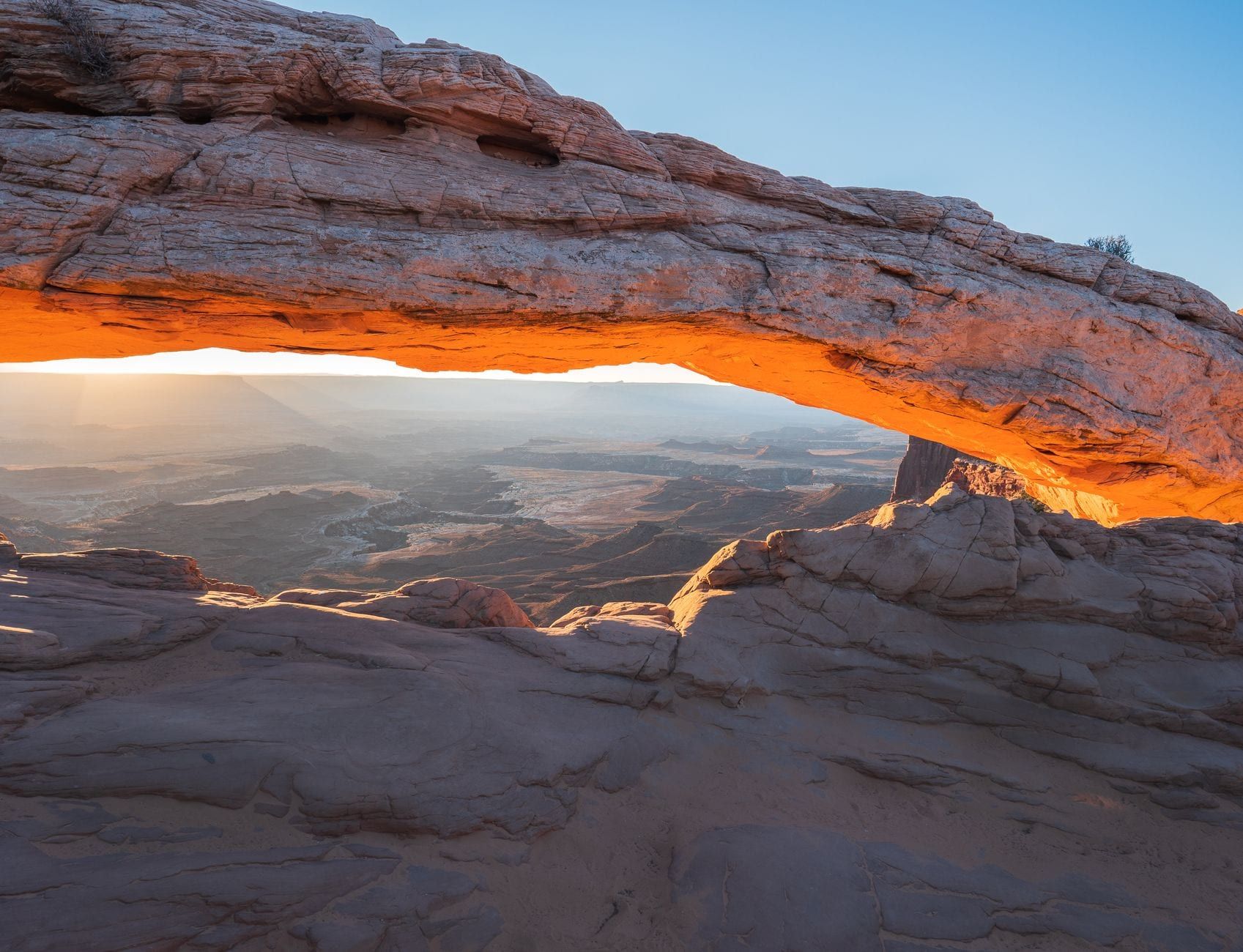
A single paved scenic drive along the Island in the Sky mesa serves a string of named overlooks, most of them steps from the parking lot. Mesa Arch is a 0.5-mile loop to a stone arch perched on the cliff edge — at sunrise it glows, and photographers line up shoulder to shoulder for it, so arrive in the dark. Grand View Point, at the drive's southern end, has a paved sidewalk to a viewpoint over miles of corrugated canyons, the White Rim bench, and features clear across in The Maze and The Needles; rangers give geology talks there spring through fall.
Green River Overlook looks down on the entrenched meanders of the Green River. Shafer Canyon Overlook peers 1,000 feet down sheer cliffs. Upheaval Dome, reached by a steep 0.6-mile trail, is a bull's-eye crater whose origin is still argued about — collapsed salt dome or meteorite impact, and the exhibits let you pick a side. The point: every stop frames something different.
The Grand Canyon's rim system
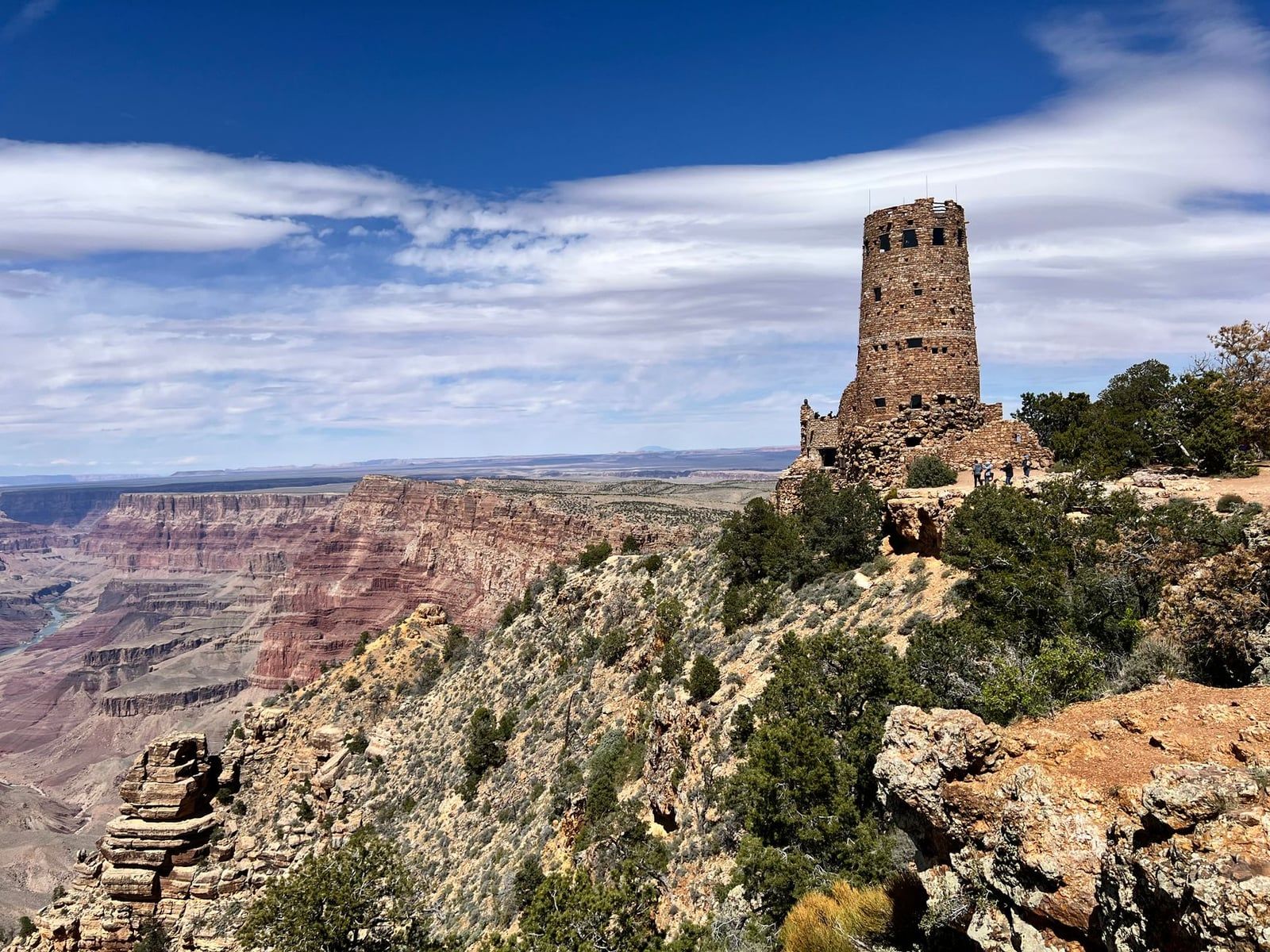
The South Rim pairs two systems. Desert View Drive runs 23 miles along the rim, open to personal vehicles, ending at the Desert View Watchtower with its panorama up and down the gorge. Closer to Grand Canyon Village, a free shuttle serves the viewpoints around Mather and Yavapai — a tool for managing parking that Canyonlands has never needed.
The honest critique travelers raise about the Grand Canyon is repetition: after the third or fourth overlook, you're looking at the same magnificent gorge from a slightly different angle. That sameness is also its power — the view simply doesn't stop for 277 miles — but if you like your overlooks to surprise you, Canyonlands is the better drive.
Below the rim: White Rim Road vs boots and mules
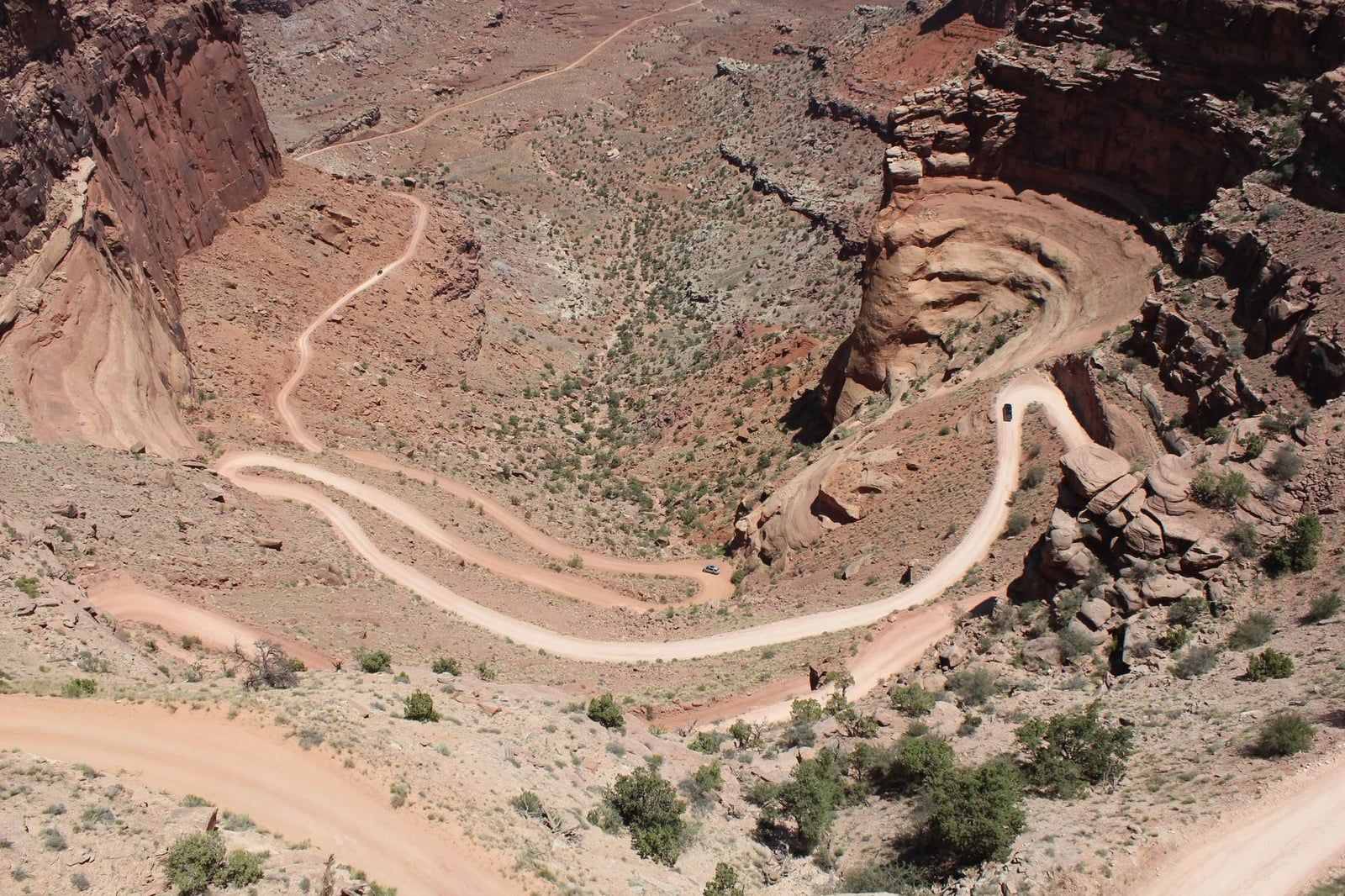
Here Canyonlands does something the Grand Canyon simply doesn't allow. The 99-mile White Rim Road loops around and below the Island in the Sky mesa on a bench of sandstone between the cliffs and the rivers. Requirements are strict: a high-clearance four-wheel-drive vehicle with low range (4LO), and no ATVs or UTVs at all. Day-use permits cost $6 and go live on Recreation.gov at 8 a.m. mountain time the day before your trip — or get one free at a visitor center the same day. Most 4WD parties take two to three days for the loop; mountain bikers take three to four.
Know the risk before you commit. Commercial towing for a disabled vehicle in the backcountry runs more than $1,000, and the road conditions page is worth reading the morning of. A softer taste is the Shafer Trail, which drops 1,500 feet through switchbacks cut into the cliff face just below the Island in the Sky entrance — no permit needed, high-clearance 4WD or AWD recommended. At the Grand Canyon, by contrast, the only ways below the rim are your own feet or a mule.
Hiking: Mesa-Top Trails vs Descending into the Canyon
The two parks offer opposite hiking experiences, and picking the wrong one for your legs is the classic Southwest mistake.
Mesa-top walking at Canyonlands
Island in the Sky has about 15 trails totaling 79 miles, and most are gentle rim walks — the park's full trail system runs 186 maintained miles. The signature outings are short: the Mesa Arch loop (0.5 miles) and the paved path at Grand View Point suit nearly everyone. For real backcountry, The Needles is the district hikers come for, with routes through the striped spires to Chesler Park and Druid Arch, and overnight trips require permits ($36 reservation fee plus $5 per person per night). Our full Canyonlands trails guide breaks the districts down trail by trail.
Descending into the Grand Canyon
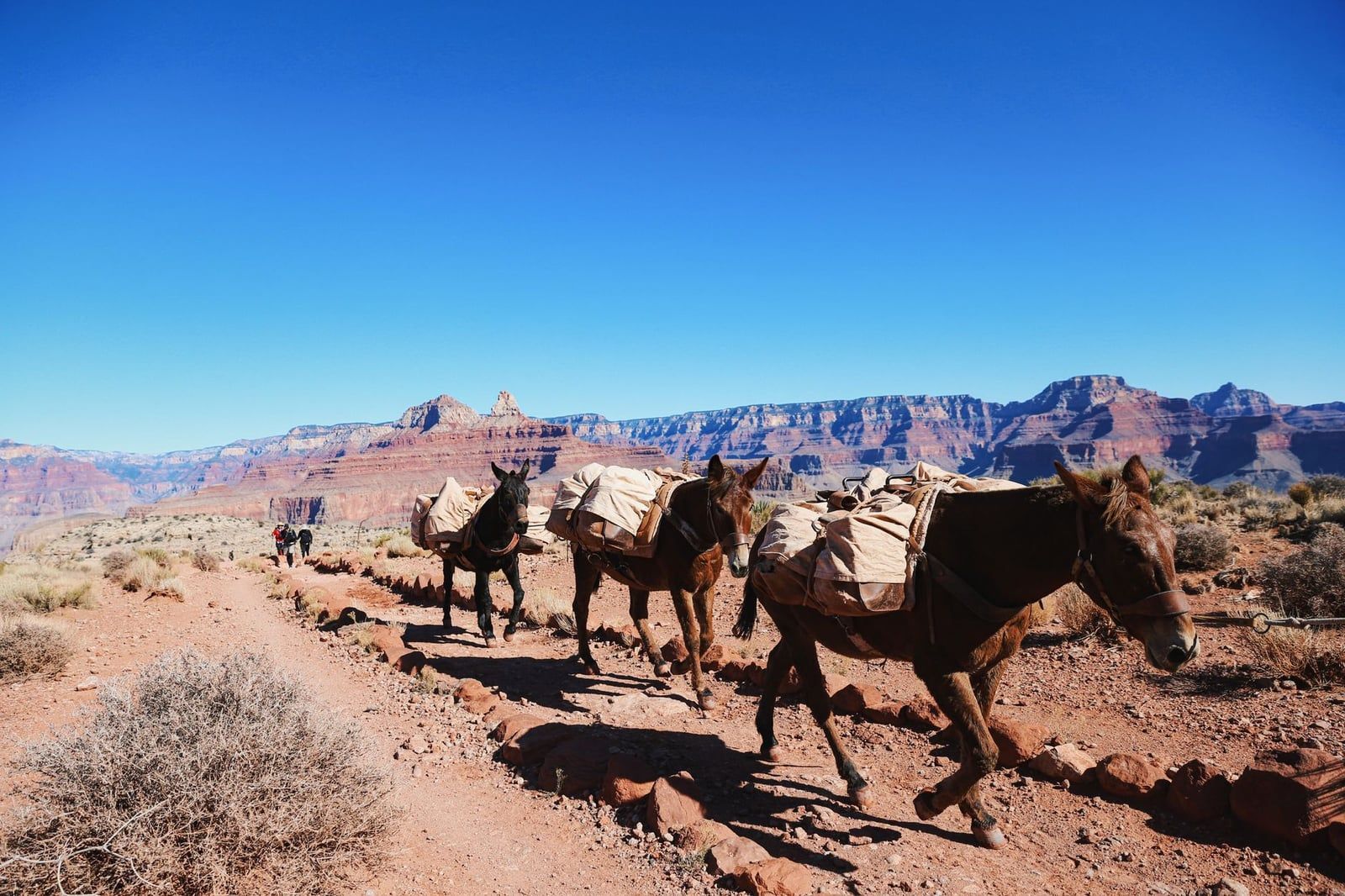
The Grand Canyon's famous hikes all drop below the rim. South Kaibab to Ooh Aah Point or Skeleton Point and Bright Angel to Indian Garden are the corridor classics; the Rim-to-Rim traverse — a strenuous 24-mile crossing with a four-hour drive between the two trailheads — is the bucket-list route. The North Rim counters with 13 shorter, gentler trails totaling about 59 miles. Below-rim campgrounds are allocated by lottery, so backpackers plan months ahead.
One safety rule governs everything at the Grand Canyon: going down is optional, coming out is mandatory. Every step you descend you must climb back up, in heat that kills unprepared hikers every summer. Canyonlands keeps you mostly on top of the mesa, where you set your own pace and bail out whenever you like. Easy variety points to Canyonlands; the famous descent and the bragging rights point to the Grand Canyon.
Crowds and Solitude
The gap is a factor of more than five: about 796,000 people visited Canyonlands in 2025, against roughly 4.4 million at the Grand Canyon. But the numbers need context, because Canyonlands' crowd is concentrated in one district.
At Canyonlands, the busy spots are Mesa Arch at sunrise and the Island in the Sky overlooks. The Needles and The Maze stay genuinely remote — they demand long drives and, in The Maze's case, 4WD skill, so most of the park's acreage goes quiet by mid-morning. At the Grand Canyon, the South Rim is busy most of the year, peaking in summer and on holiday weekends when the village and shuttle stops jam up.
The Grand Canyon has its own escape valves. The North Rim receives only about 10% of the park's visitation, and the below-rim trails thin out fast once you're fifteen minutes past the last water station. Spring break is the one window when both parks feel crowded — Canyonlands merely busy, the Grand Canyon packed. In every other season, Canyonlands is the solitude pick.
Best Time to Visit: Seasons, Heat and Winter Access
April–May and mid-September–October are the sweet spot for both parks. Canyonlands then delivers daytime highs of 60–80°F and the campgrounds fill early — though "filling" means 38 sites total. Our season-by-season guide to Canyonlands covers the fine print.
Summer is brutal at both, in different ways. Canyonlands averages a 100°F high in July (the record is 116°F), and July–August monsoon storms add flash-flood danger to the canyons. The Grand Canyon's below-rim temperatures run hotter than the rim, which is why rangers there treat heat as the park's main hazard. If summer is your only window, start hikes at dawn and stay off below-rim trails by late morning.
Winter is the sharpest contrast between the parks, and Canyonlands' quiet advantage. It's open 24 hours a day, year-round, with no timed entry — snow and ice are possible, but roads are plowed and you may share an overlook with three other cars. The Grand Canyon's North Rim roads close December 1–May 14. The South Rim stays open, but it sits around 7,000 feet (the North Rim around 8,000), takes 4–5 feet of snow a year, and runs noticeably colder than Canyonlands' 5,930-foot mesa tops.
Getting There: Gateway Towns, Airports and Pairing the Two Parks
Your hub city usually decides your park before any scenery does. Canyonlands pairs with Salt Lake City, a three-to-four-hour drive away, or with tiny Canyonlands Field Airport, 16 miles from Moab. The Grand Canyon pairs with Las Vegas (4–5 hours) or Phoenix (about four hours). Flying into SLC makes Canyonlands the obvious pick; flying into Vegas or Phoenix makes the Grand Canyon the easy one.
Island in the Sky is 32 miles from Moab, about 40 minutes; The Needles is roughly 1.5 hours via Monticello. Between the two parks, expect 320–409 driving miles and 5.5–7 hours depending on which rims you connect. The full Moab-to-Canyonlands drive guide covers routes and stops if Utah is your base.
Each park anchors its own cluster. Around Moab you get Arches National Park 30 minutes up the road, Dead Horse Point State Park on the same UT 313 corridor as Island in the Sky, and the rest of Utah's Mighty 5 within a day's drive — so many visitors end up weighing Arches vs Canyonlands rather than Canyonlands vs the Grand Canyon. On the Arizona side, Sedona, Flagstaff and Page all sit within two to four hours of the South Rim, with Horseshoe Bend and Antelope Canyon near Page.
Overnights differ sharply. Moab is a full-service adventure town — hotels, restaurants, gear shops, shuttle companies — while Canyonlands itself has no gas, food, or lodging, just two small year-round campgrounds: Willow Flat at Island in the Sky ($15 a night, 12 sites, first-come first-served) and The Needles ($20 a night, 26 sites). The Grand Canyon side runs on Grand Canyon Village, Tusayan and Flagstaff, plus Mather Campground, the only above-rim campground open year-round, and hotels right on the rim. Book either park's lodging months ahead for spring and fall.
The Verdict: Which Park Should You Choose?
Everything above compresses into six scenarios. Find your row, take your park.
| Canyonlands | Grand Canyon | |
|---|---|---|
| You have one day | Island in the Sky's drive, Mesa Arch and Grand View Point fill it | South Rim scenic drive and shuttle cover the essentials |
| You want solitude | 796K annual visitors; The Needles and Maze stay empty | 4.4M annual visitors; North Rim and below-rim trails thin out |
| You have a 4WD or a mountain bike | White Rim Road — the park's signature multi-day trip | No driving below the rim; foot or mule only |
| You want the iconic descent | Mostly flat mesa-top walking | South Kaibab, Bright Angel, Rim-to-Rim |
| You're traveling in winter | Open year-round, no timed entry, near-empty trails | North Rim closed Dec 1–May 14; snowy but open South Rim |
| You're flying into | Salt Lake City (3–4 hrs to Moab) | Las Vegas (4–5 hrs) or Phoenix (about 4 hrs) |
Time budget: one full day covers Island in the Sky's highlights, and one full day covers the Grand Canyon South Rim — add a second day for The Needles or for hiking below the Grand Canyon's rim. Neither park rewards a rushed half-day, and both punish one in July heat.
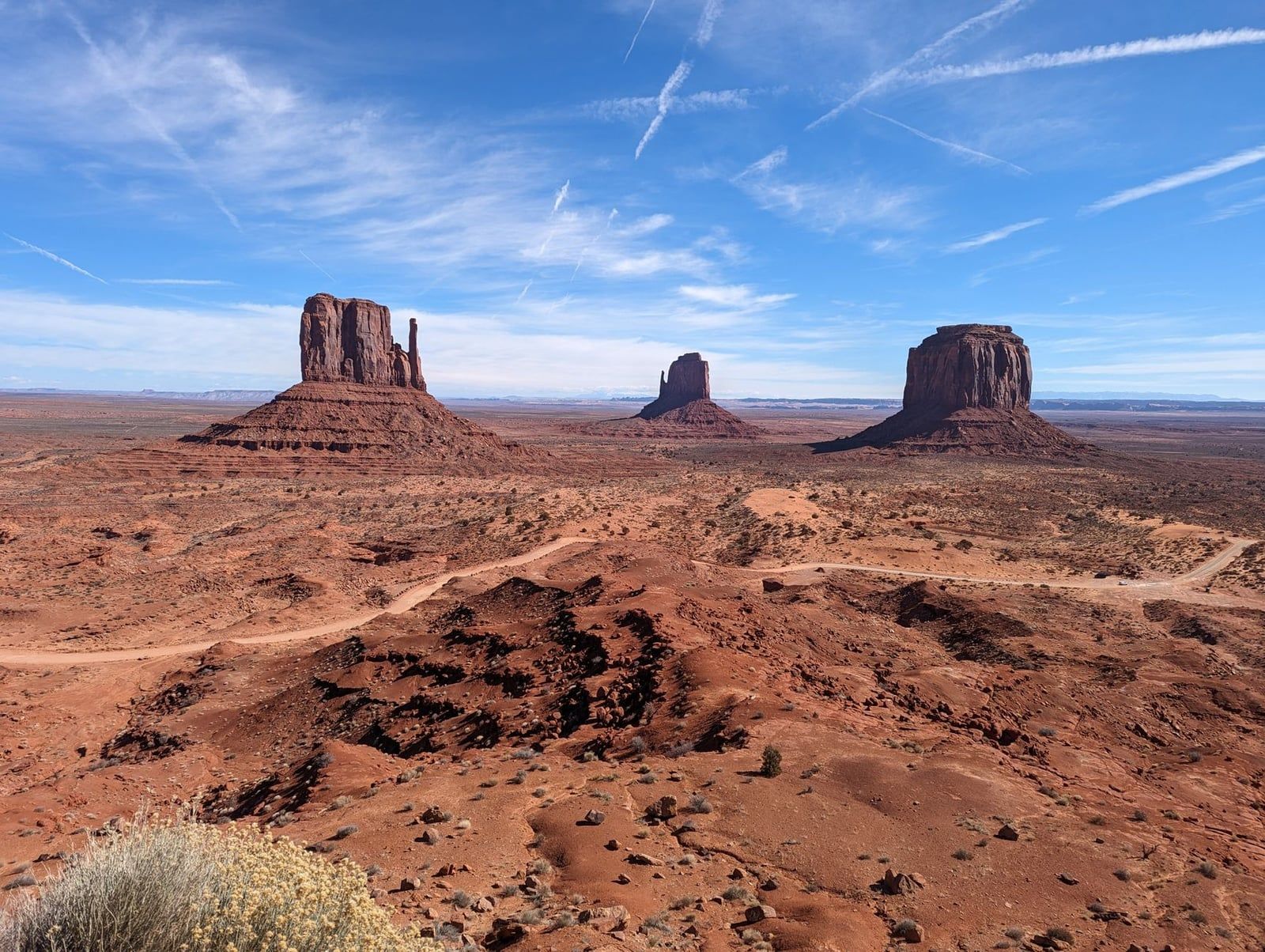
The better answer, if your calendar allows it, is the loop that does both. Moab to the Grand Canyon South Rim runs 358 miles, with Monument Valley and Page's slot canyons as natural overnight stops in between — five to seven hours of driving spread across two or three days, each day landing on a landscape worth the fuel. Two parks, one river, and no need to choose.
Frequently asked questions
Is Canyonlands part of the Grand Canyon?
No. They are separate national parks in different states — Canyonlands in Utah, Grand Canyon in Arizona — roughly six hours apart by road. Both were carved by the Colorado River, but Canyonlands sits at the confluence of the Green and Colorado rivers and is a labyrinth of canyons and mesas rather than a single mile-deep gorge.
Can you visit Canyonlands and the Grand Canyon on the same trip?
Yes, but not as a day trip. The parks are 320–409 driving miles apart (5.5–7 hours), so they work best chained on a Southwest road trip — for example Moab, then Monument Valley or Page, then the Grand Canyon — with at least a full day in each park.
Which is better if you only have one day?
Both are doable in a day. The Grand Canyon South Rim delivers the famous mile-deep view via Desert View Drive and the shuttle system; Island in the Sky's paved scenic drive plus Mesa Arch, Grand View Point and Upheaval Dome fills a day just as completely. First-timers and bucket-listers should lean Grand Canyon; solitude seekers should lean Canyonlands.
Can you drive into the canyon at Canyonlands?
Yes — the 99-mile White Rim Road loops around and below the Island in the Sky mesa, something impossible by car at the Grand Canyon. You'll need a high-clearance 4WD vehicle with low range and a day-use permit (reserved from 8 a.m. MT the day before on Recreation.gov, or free at a visitor center the day of). The full loop usually takes 2–3 days by 4WD or 3–4 by bike, and towing a disabled vehicle costs over $1,000.
Which park is less crowded?
Canyonlands, by a wide margin: roughly 796,000 visitors in 2025 versus about 4.4 million at the Grand Canyon. Within each park, Canyonlands' crowds concentrate at Mesa Arch at sunrise and the Island in the Sky overlooks, while the Grand Canyon's North Rim receives only about 10% of its visitation.
Is Canyonlands or the Grand Canyon better in winter?
Canyonlands. It's open 24 hours a day, year-round, with no timed entry, and winter brings quiet trails and the chance of snow on red rock. The Grand Canyon's North Rim roads close December 1–May 14, and the South Rim takes 4–5 feet of snow a year, though it stays open.
Are dogs allowed at Canyonlands or the Grand Canyon?
Both are restrictive. Canyonlands bans pets from all trails, overlooks and the backcountry; leashed pets are allowed only on paved roads, in parking lots and in campgrounds. The Grand Canyon allows leashed dogs on above-rim trails and in developed areas, but not below the rim or on shuttle buses.
Sources
- nps.gov/cany/planyourvisit/index.htm
- nps.gov/cany/planyourvisit/basicinfo.htm
- nps.gov/cany/planyourvisit/fees.htm
- nps.gov/cany/planyourvisit/whiterimroad.htm
- nps.gov/cany/planyourvisit/dayusepermits.htm
- nps.gov/cany/planyourvisit/road-conditions.htm
- nps.gov/cany/learn/management/index.htm
- nps.gov/grca/learn/nature/index.htm
- nps.gov/grca/planyourvisit/fees.htm
- nps.gov/grca/learn/management/upload/2025-Park-Profile-508.pdf