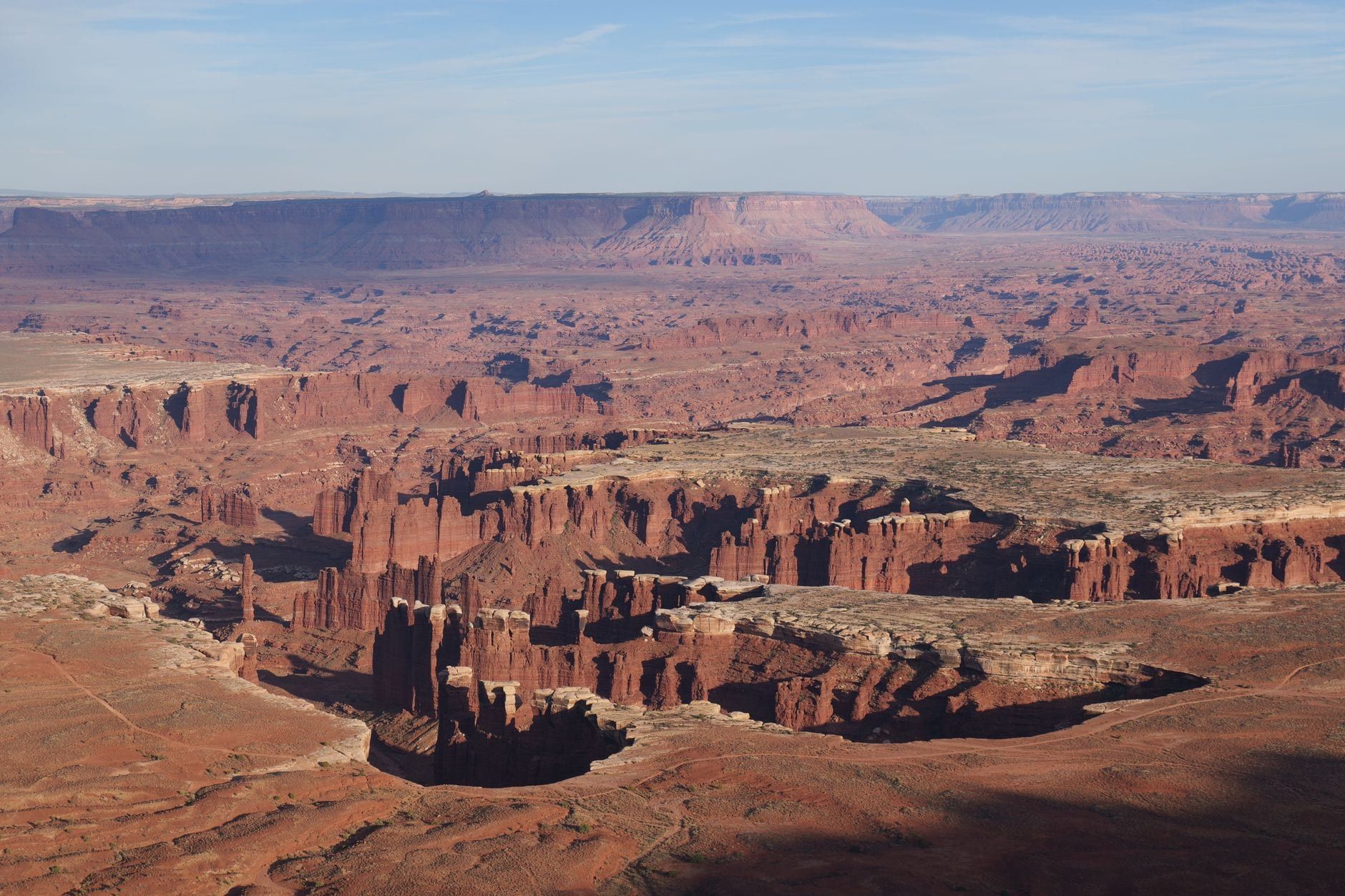
Arches and Canyonlands sit 26 miles apart outside Moab, and they deliver opposite experiences: one parks you at the base of 2,000 stone arches, the other stands you on a mesa 1,000 feet above river-carved canyons. Most travelers can see the best of both in one long day. If you have to choose, Arches wins for first-timers, photographers chasing the postcard shot, and families with young kids; Canyonlands wins for hikers, solitude, and anyone who'd rather earn the view.
Here's the factor-by-factor breakdown — sizes, trail stats, fees, entry rules, seasons — ending in a verdict matched to your trip length and travel style.
Arches vs. Canyonlands at a Glance
| Arches | Canyonlands | |
|---|---|---|
| Size | 76,519 acres (119 sq mi) | 337,598 acres (527 sq mi) |
| Annual visitation | 1.81 million (2021) | ~818,000 (2024) |
| Drive from Moab | 5 mi / ~10 min | 32 mi / ~40 min (Island in the Sky) |
| Entry fee | $30 per vehicle, 7 days | $30 per vehicle, 7 days |
| Reservation to enter | None in 2026 | None; open 24/7 |
| Best for | Iconic photos, short trails, families | Canyon-scale views, long hikes, solitude |
Those numbers tell most of the story. Arches funneled nearly 1.8 million visitors in 2021 down a single dead-end road toward a handful of famous formations; Canyonlands spreads roughly half that crowd across a park four times the size. And most of those Canyonlands visitors never leave Island in the Sky, the mesa-top district nearest Moab.
The park's other pieces — the Needles, the Maze, and the Green and Colorado river corridors — have no road connections to each other, so "Canyonlands vs. Arches" almost always means Island in the Sky vs. Arches. Expecting to hop between districts in a day doesn't work; they sit 2 to 6 hours apart by car.
One fee note: an Arches ticket gets you nothing at Canyonlands. The $55 Southeast Utah annual pass covers both parks plus Natural Bridges and Hovenweep, and the $80 America the Beautiful pass covers all federal recreation lands. Children 15 and under enter free either way.
The Core Difference: Up-Close Arches vs. Look-Down Canyons
Every other difference between the parks flows from one thing: where you stand relative to the rock.
Arches: A Walk-Through Sculpture Garden
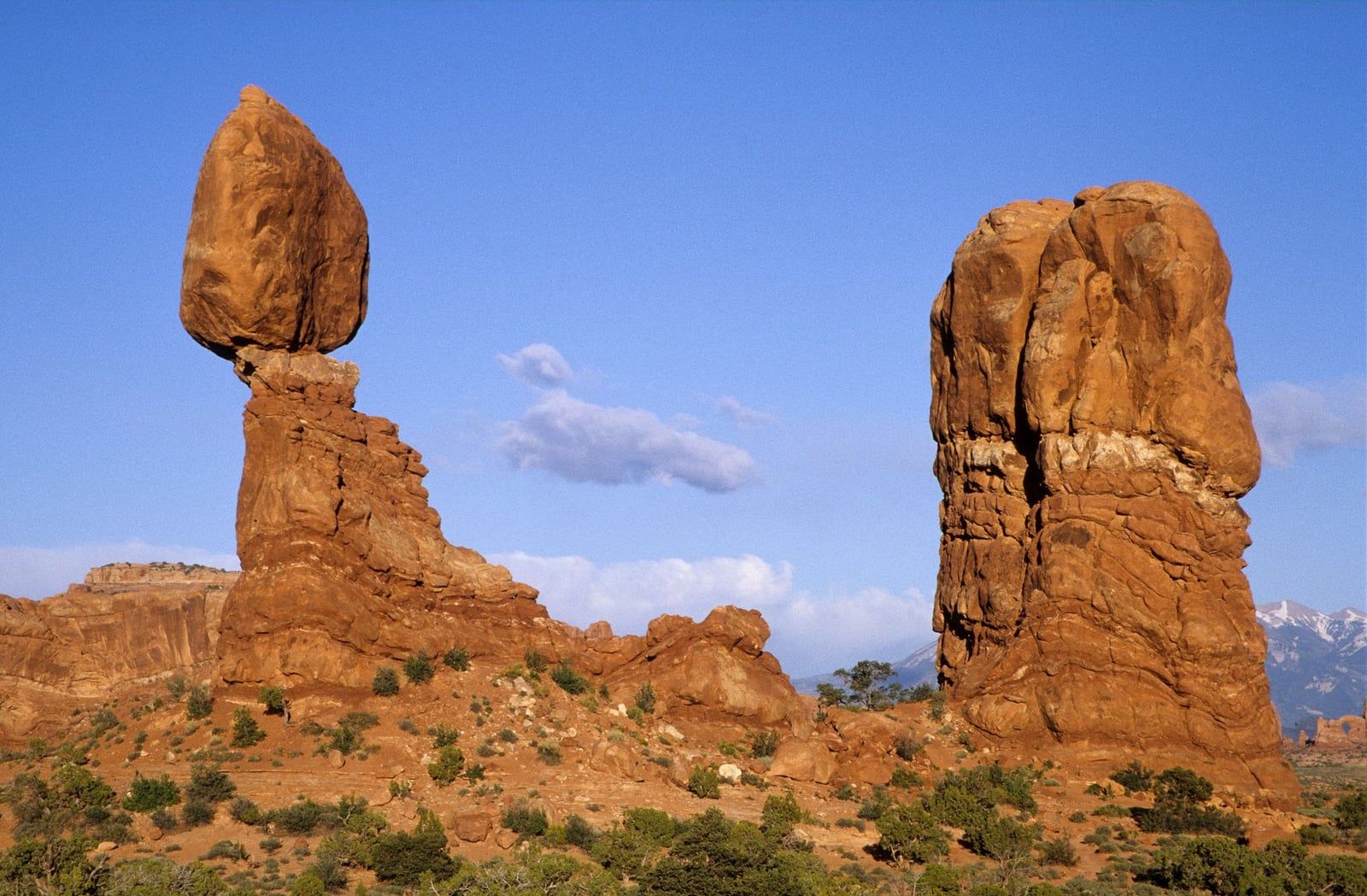
Delicate Arch, Balanced Rock, the Windows — the road at Arches runs below the formations, so you spend the day looking up. More than 2,000 natural arches stand within the park, the densest concentration on earth, and the famous ones sit minutes from pavement. The Windows section and Double Arch have paved, level approaches that work for wheelchairs and strollers; Balanced Rock is a roadside pullout. Sightseeing here is intimate and formation-focused, one arch after the next between fins of Entrada sandstone.
Canyonlands: Standing Above It All
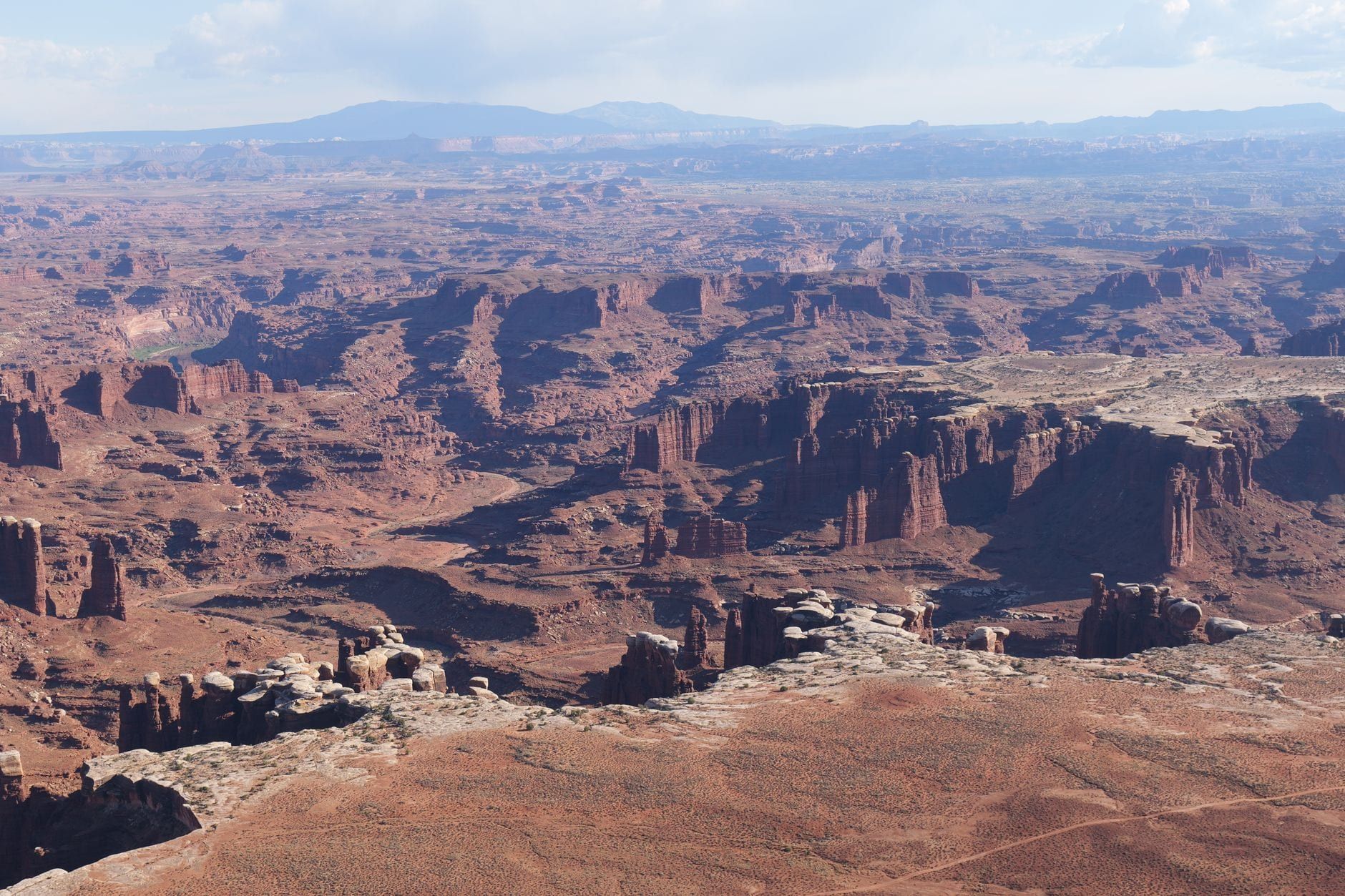
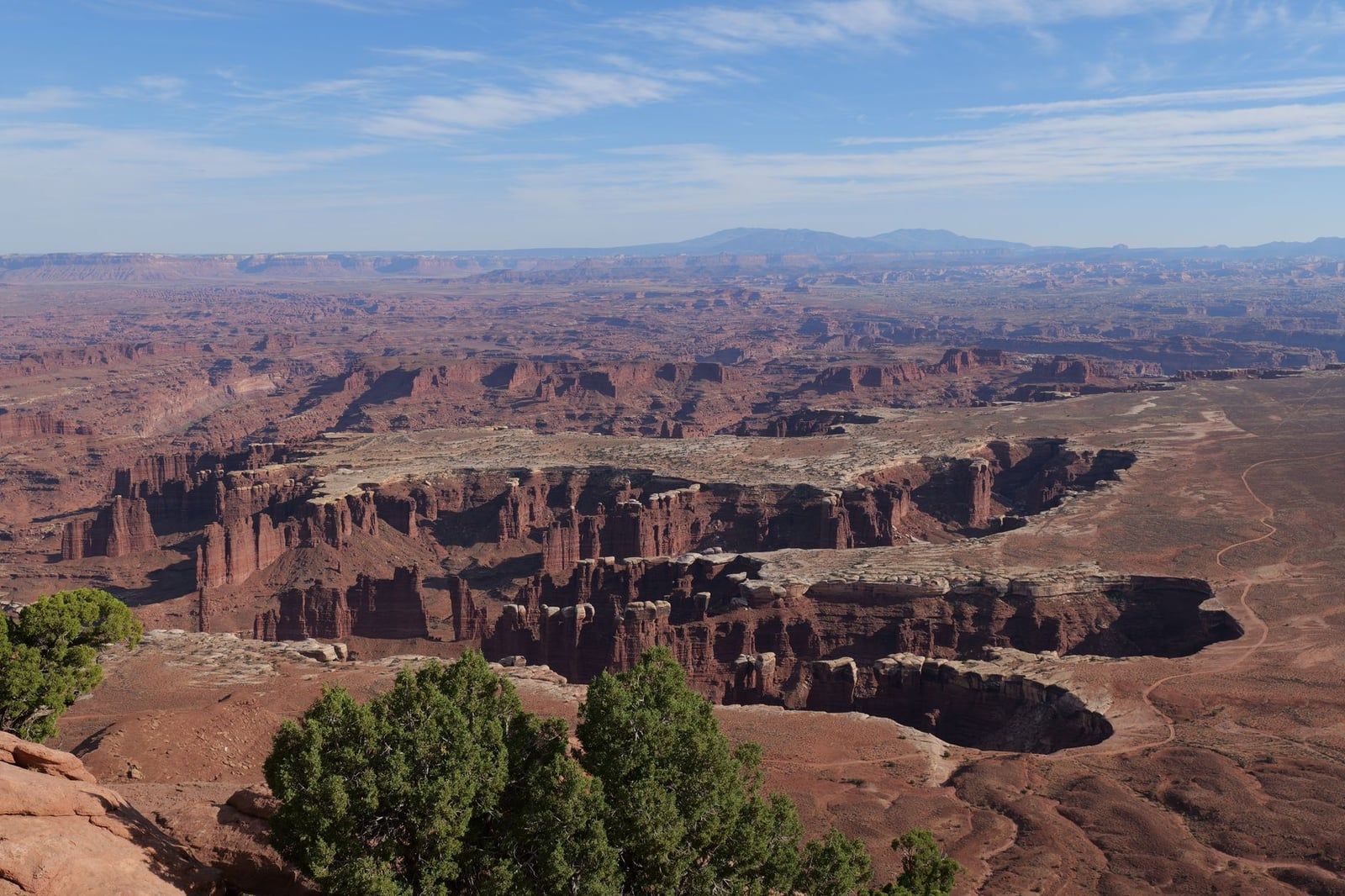
Island in the Sky is a flat mesa that ends in sheer sandstone cliffs more than 1,000 feet above the surrounding terrain — the mesa top sits at 5,930 feet. You look down, over canyons carved by the Green and Colorado rivers, and visitors routinely compare the scale to the Grand Canyon. Every stop is an edge. Overlooks require leaving the car and walking, and the payoff is distance rather than any single formation. In Arches you photograph an arch; in Canyonlands you photograph a thousand square miles of canyon.
Getting There and Exploring Each Park by Car
Arches' entrance station is 5 miles — about 10 minutes — north of downtown Moab. Island in the Sky is 32 miles and roughly 40 minutes away via UT 313, and the drive from Moab to Canyonlands passes Dead Horse Point State Park on the way. Bring a paper map: NPS warns that GPS units sometimes route drivers to Island in the Sky the wrong way. The two park entrances sit 26 miles and about 30 minutes apart, which is exactly what makes the one-day double feasible.
The scenic drives suit different styles. Arches' runs 18 miles one-way and dead-ends at Devils Garden, passing Balanced Rock, the Windows, and the Delicate Arch trailhead. Island in the Sky's drive is about 34 miles round trip and takes 2 to 3 hours with stops — NPS budgets one hour for Grand View Point alone, two for the full loop with Mesa Arch and Green River Overlook added. Neither park requires hiking to see the essentials, but Arches shows its icons from the car window while Canyonlands makes you walk to each rim.
Off-roaders get far more from Canyonlands. The White Rim Road is a 99-mile loop on the bench below the mesa, legal only for high-clearance four-wheel-drive vehicles in low range, with a $6 day-use permit and towing bills that can top $1,000 when things go wrong. The Shafer Trail, which switchbacks 1,500 feet down the cliff face, needs no permit and works as a sampler for confident drivers. Arches' dirt routes, like Willow Springs Road, are short detours by comparison.
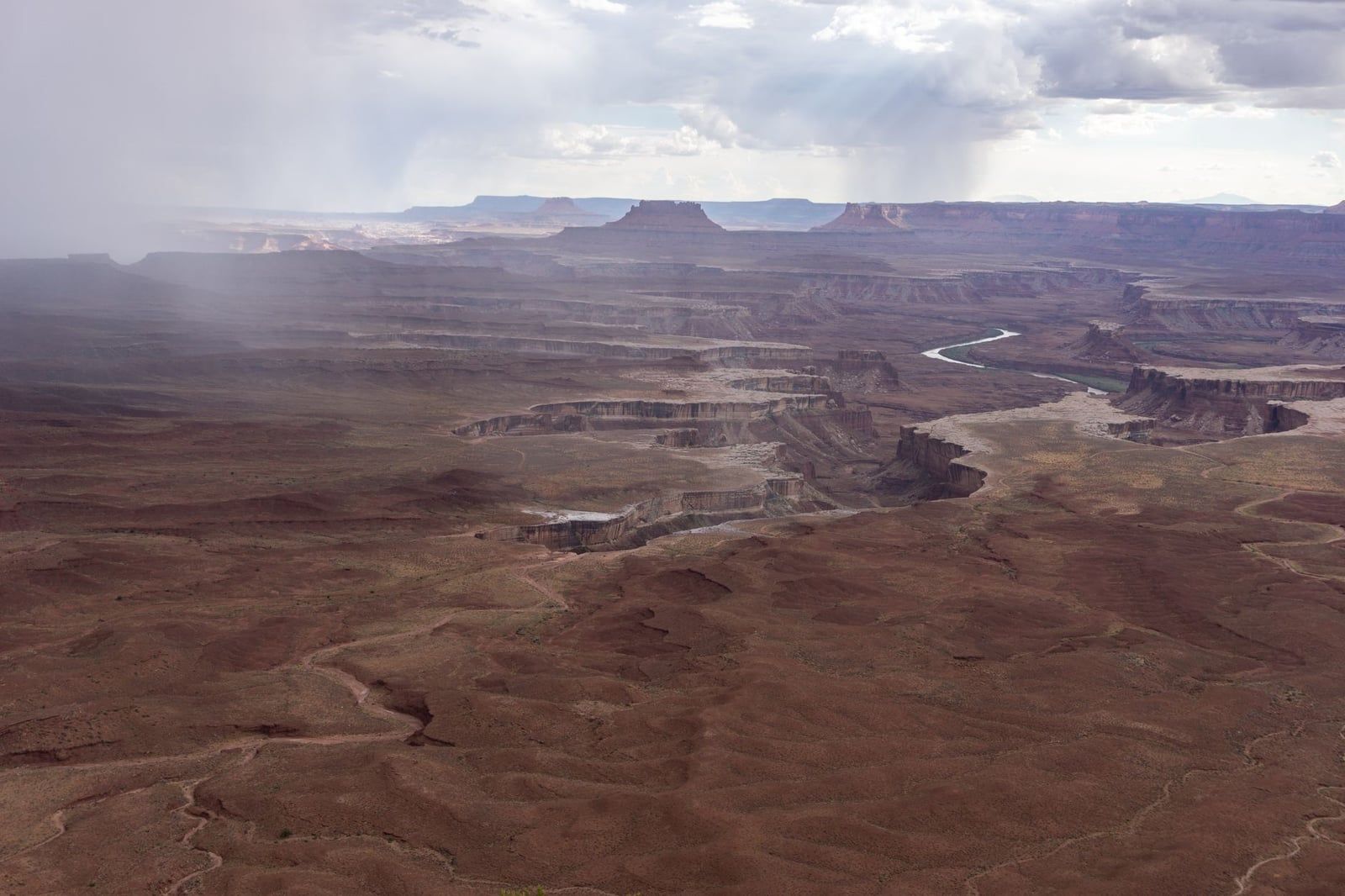
The other districts are separate trips, full stop. The Needles is about 1.5 hours from Moab and deserves its own day. The Maze requires high-clearance 4WD and backcountry experience. Horseshoe Canyon, home of the Great Gallery rock art, is roughly 2.5 hours out via 30 miles of unpaved road. None of them is a casual add-on to a Moab day.
Hiking: Short Icon Trails vs. Long Wilderness Routes
The honest answer to "which park has better hiking" is Canyonlands, by a factor of three. Per the NPS trail counts, Island in the Sky alone has 15 trails totaling 79 miles; all of Arches has 16 trails totaling about 26 miles. Our full Canyonlands trail guide covers how to pick between them, but the short version follows.
Arches' trails are short and famous. Delicate Arch is 3.2 miles round trip with 629 feet of gain — the longest walk most visitors make. The Windows/Turret Arch loop runs 1.2 miles, Double Arch 0.6, and Landscape Arch a flat 2-mile round trip on a paved path. Stretch to the full Devil's Garden loop and the day grows to 7.9 miles past seven arches. The Fiery Furnace, a slot-and-fin maze, requires a permit for either the ranger-led or self-guided hike — the one reservation that still exists at Arches even with no timed entry this year.
Island in the Sky counters with Mesa Arch, a 0.5-mile loop; Grand View Point at 2 easy miles; White Rim Overlook at 1.8; and Upheaval Dome's crater viewpoint at 0.6. Dropping below the rim, the Syncline Loop runs about 8 miles. For a full day on foot, the 10.4-mile Chesler Park Loop in the Needles district threads striped sandstone spires and is the best long hike either park offers.
| In Arches | In Canyonlands | The trade |
|---|---|---|
| Delicate Arch (3.2 mi, 629 ft) | Mesa Arch (0.5 mi loop) | Big effort for the arch vs. an easy walk to the sunrise glow |
| Windows Loop (1.2 mi) | Grand View Point (2 mi) | Arches up close vs. a panorama at the mesa's end |
| Landscape Arch (2 mi, paved) | White Rim Overlook (1.8 mi) | Flat arch stroll vs. mesa-edge walk over the 4WD road |
| Devil's Garden loop (7.9 mi) | Syncline Loop (8 mi) | Seven arches vs. a crater-rim wilderness circuit |
Backpackers have a clearer call still. Arches has exactly 7 backcountry sites with a $7 permit; Canyonlands has extensive backcountry in the Needles and the Maze at $36 per reservation plus $5 per person per night, bookable up to four months ahead. If the tent is coming, Canyonlands is the only real choice.
Crowds, Entry Rules, and Permits
The current rules, straight from NPS: no timed-entry reservations at Arches in 2026. Only two things there need booking — Fiery Furnace hikes and Devils Garden Campground. The pilot system that ran from 2022 through 2025 (a $2 permit for April–October entry) is discontinued, though several top-ranking articles still describe it as current. Canyonlands never required one and is open 24 hours a day; see our hours and fees guide for the details that do apply.
Crowds still matter, though. Arches funnels everyone down one road, and in summer the trailhead lots can fill by 7:30 am — when that happens, rangers hold entering vehicles for 3 to 5 hours. Arrive before 8 or after 3, and you'll roll straight in. Canyonlands runs roughly half the visitation spread across many overlooks, but Island in the Sky parking can still fill on late-spring and summer mornings, and Mesa Arch at sunrise draws a line of photographers.
Want real emptiness? In Arches, hike past Landscape Arch toward Double O Arch or out to Tower Arch on the dirt roads. In Canyonlands, skip the mid-morning rush at Mesa Arch and walk Syncline Loop, Aztec Butte, or Murphy Point — or just drive to the Needles, where you'll share trails with a fraction of the crowd.
Best Time to Visit: Season by Season
April–May and mid-September through October are the windows: daytime highs average 60–80°F, and both campgrounds fill early in the morning. That's also when ranger geology talks run at Grand View Point. Our month-by-month best time to visit Canyonlands guide goes deeper, but the season shapes which park to pick too.
July and August average 100°F highs with almost no shade — rangers logged 23 heat-related search-and-rescue incidents across the two parks in summer 2026 — and monsoon storms add flash-flood risk through those months. If summer is your window, Canyonlands' drive-up overlooks are slightly kinder: the mesa top sits near 6,000 feet, so it runs cooler than Arches' lower terrain, and you can see the park without walking far.
Winter favors Arches. December through February brings highs of 30–50°F and thin crowds, snow on red rock photographs beautifully, and the 10-minute drive back to a warm Moab hotel counts for a lot. Island in the Sky's rim overlooks get windier and rawer in the same months, and small amounts of ice can close unpaved roads. Whatever the season, carry about half a liter of water per person per hour of hiking — more in summer — and start at dawn. A father and daughter died of heat exposure on an Island in the Sky trail in summer 2024. Take the heat literally.
Sunrise, Sunset, and Night Skies
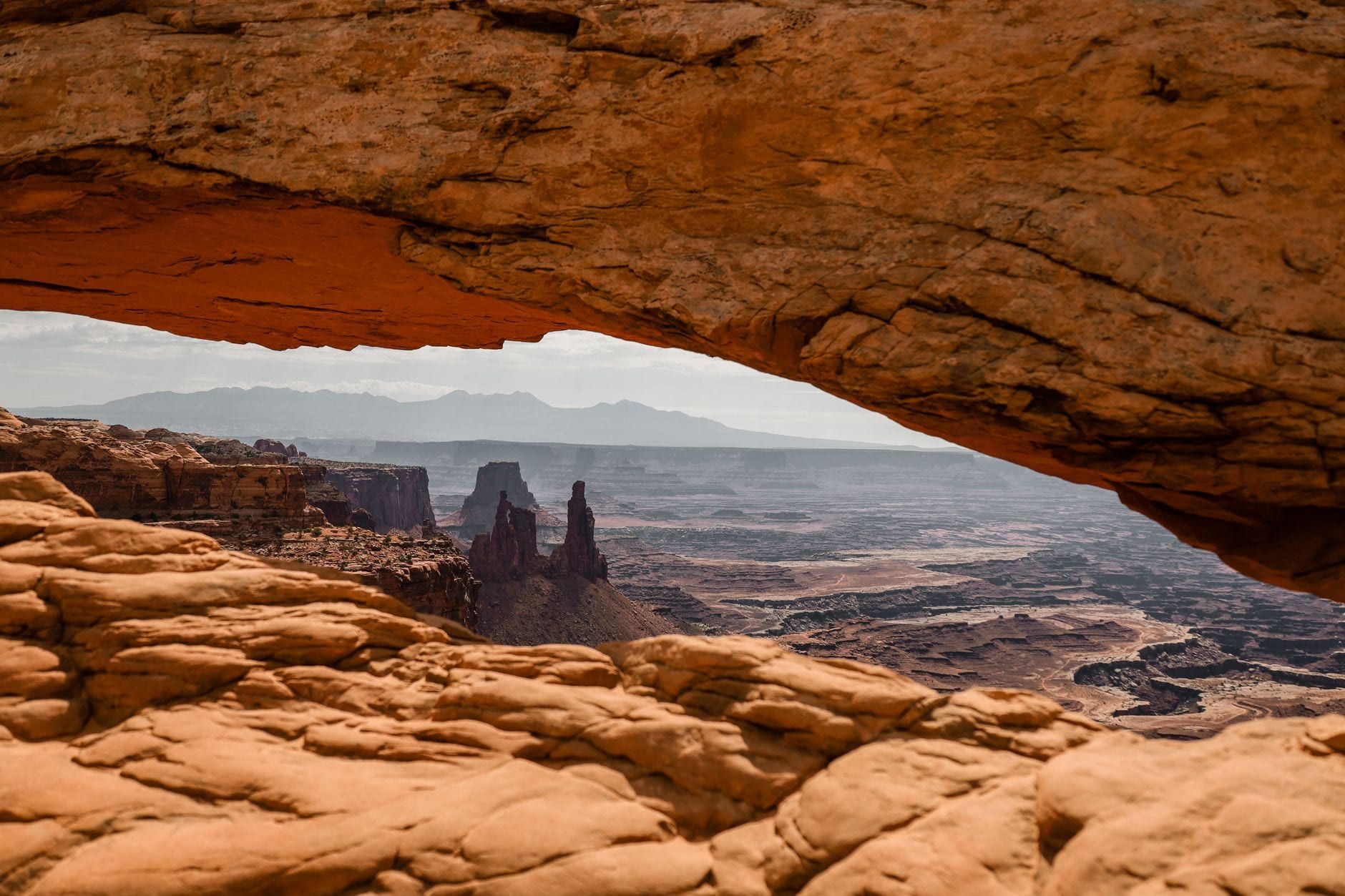
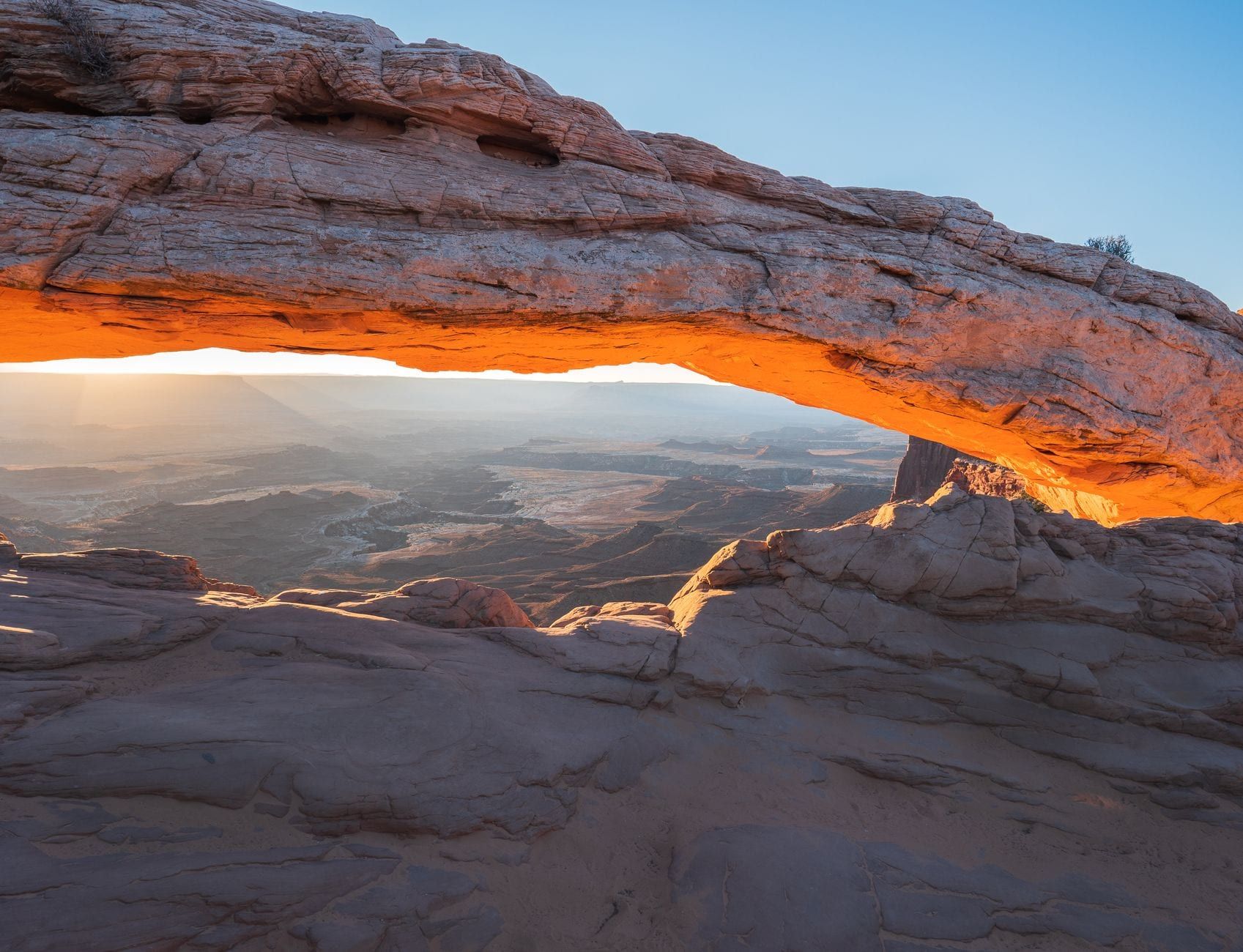
Mesa Arch is the sunrise shot in southeast Utah. First light reflects off the cliff below and sets the arch's underside glowing orange, and photographers claim tripod spots 45 minutes or more before dawn — in July that means a 4:30 am alarm from Moab. Delicate Arch at sunrise delivers comparable drama with thinner crowds, but it's a 3-mile round trip in the dark, so pack a headlamp.
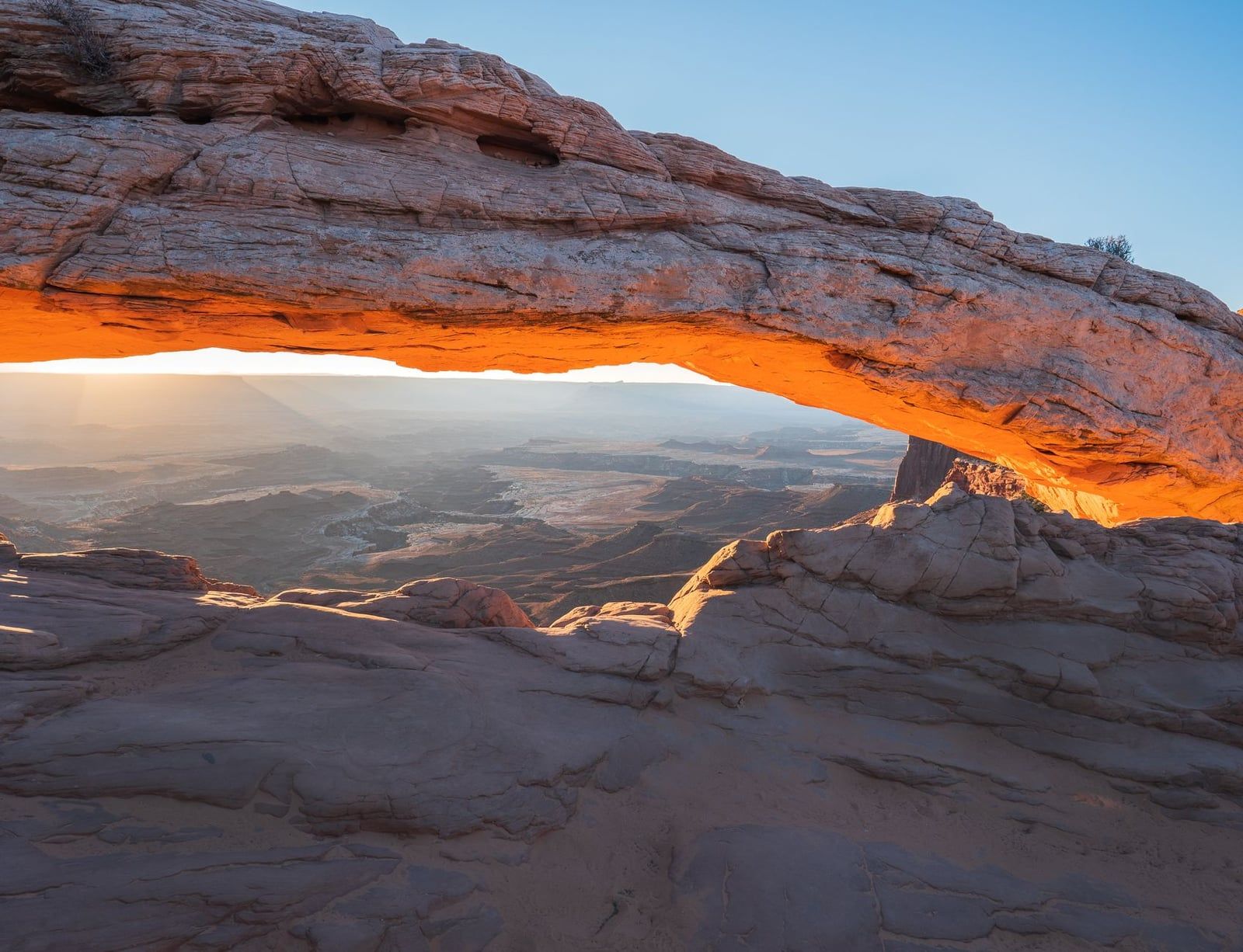
For sunset, Green River Overlook faces west over the river's entrenched meanders, and rangers wrap up their geology talks at Grand View Point as the light goes long. In Arches, Tower Arch is the secluded pick and the Windows area the convenient one, with Balanced Rock glowing red a mile from the road.
After dark, both parks are certified International Dark Sky Parks, and Canyonlands in particular sits far enough from Moab's glow that the Milky Way is bright enough to hike by. Stargazing from a park campground beats the 40-minute drive back to town — and note that lighting up the formations with artificial light is prohibited in Canyonlands.
Camping and Where to Stay
Neither park has lodging, food, or gas, so Moab is the practical base — hotels, motels, vacation rentals, and every service a traveler needs. Camping inside a park buys the pre-dawn entry that beats both crowds and heat, which is worth serious consideration for photographers.
At Arches, Devils Garden Campground is the only option: 51 sites, no hookups, and reservations generally needed about six months ahead for high season. Canyonlands is easier on short notice. Willow Flat at Island in the Sky has 12 first-come, first-served sites at $15 a night, open year-round; the Needles Campground has 26 sites at $20 with running water and some sites reservable on Recreation.gov. In spring and fall, both fill early in the morning. Outside the parks, the BLM's Horsethief Campground sits about 8 miles from the Island in the Sky entrance on the road toward Moab — a solid backup when Willow Flat is full by 10 am.
The Verdict: Which Park (or Both?) Is Right for Your Trip
The decision mostly comes down to time and travel style. Pick Arches if any of these fit:
- It's your first Utah park and time is short
- You want the famous arches and the photos
- Young kids or limited mobility are in the mix
- You're basing in Moab without a full day to spare
Pick Canyonlands instead if:
- You're here to hike, with real mileage
- Solitude outranks checking off landmarks
- You want canyon-scale, look-down views
- Backpacking or 4WD routes are on the agenda
By trip length: a single morning means one park — Arches for most first-timers, Island in the Sky if you've seen arches elsewhere. A full day covers both (plan below). Two days means one full day each, which is the comfortable split. Three to four days opens up the Needles, the White Rim Road, and Moab-area extras like Fisher Towers.
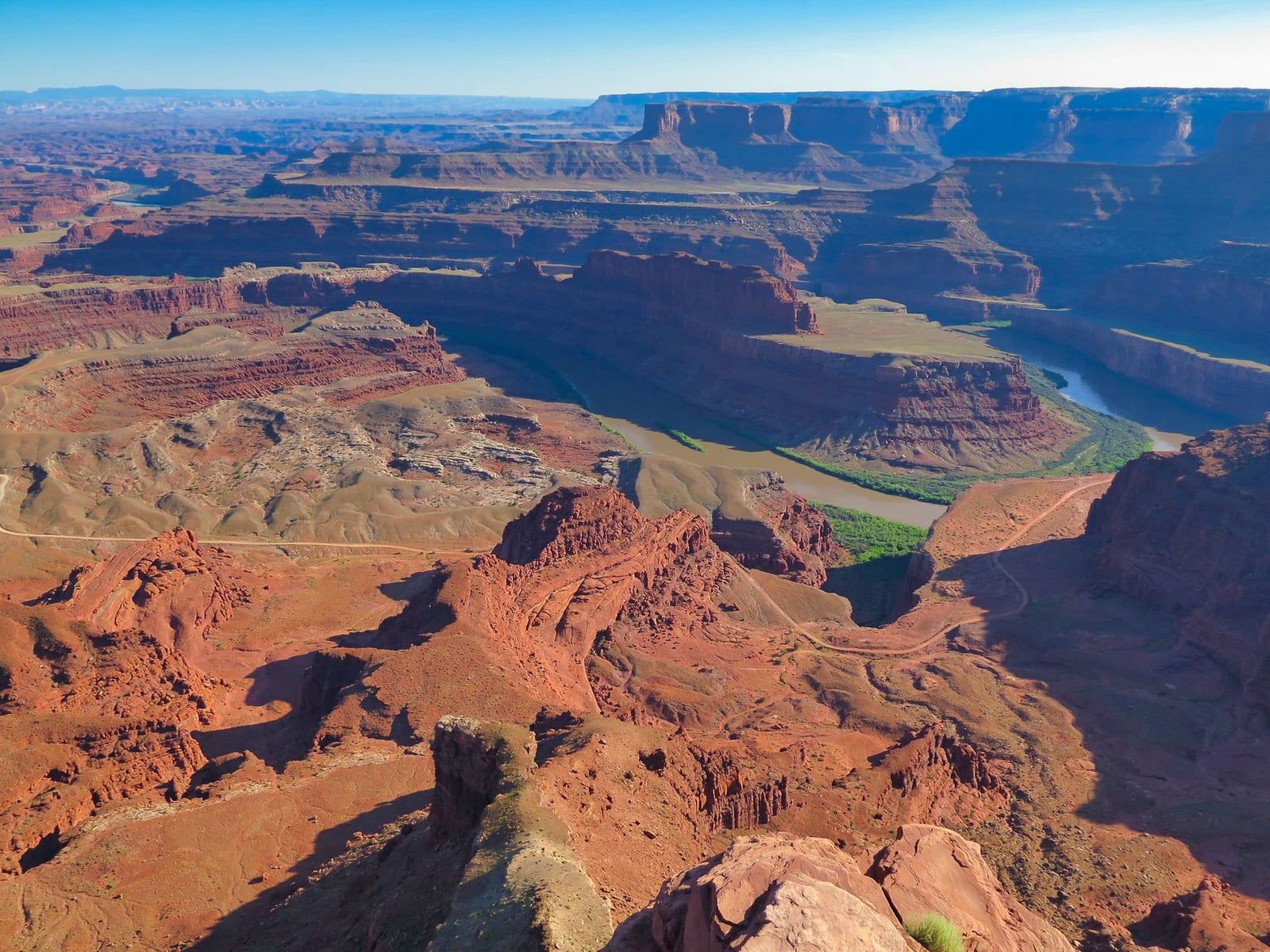
The one-day double works like this: Mesa Arch at sunrise, then Green River Overlook and Grand View Point in the morning light. The 30-minute drive between entrances lands you at Arches after the midday crunch — Windows and Double Arch first, then Delicate Arch for sunset, a 3.2-mile round trip in cooling air. On the way back from Canyonlands, Dead Horse Point State Park is a 17-minute, 12-mile detour from Island in the Sky ($20 per vehicle) with a 2,000-foot overlook of the Colorado River's gooseneck — comparable views, and it's an International Dark Sky Park too.
Two footnotes on who's in the car. Dogs are banned on every trail in both parks — leashed pets are legal only in campgrounds and on paved roads — so swap trail time for Corona Arch or Grandstaff Canyon on BLM land outside Moab if the dog is coming. Families with young kids should lean Arches regardless: Windows, Double Arch, and Sand Dune Arch are minutes from the road, and Moab is close enough for a pool break at midday. Canyonlands suits older kids who can handle Whale Rock or the Grand View Point walk.
Bottom line: with a full day, do both — Canyonlands at dawn, Arches at dusk. Forced to pick one park, most first-time visitors should pick Arches and promise themselves Canyonlands on the next trip.
Frequently Asked Questions
Is Arches or Canyonlands better?
Neither is objectively better. Arches has the world's densest concentration of natural arches — over 2,000 — on short, easy trails 5 miles from Moab, which makes it the best pick for first visits and short trips. Canyonlands has vast look-down canyon vistas, real solitude, and triple the trail mileage, which makes it better for hikers and longer stays.
Can you visit Arches and Canyonlands in one day?
Yes, if you stick to highlights. The parks are 26 miles and about 30 minutes apart. The standard plan: Mesa Arch at sunrise, Green River and Grand View Point overlooks in the morning, Windows and Double Arch in the afternoon, and Delicate Arch at sunset.
How far apart are Arches and Canyonlands?
The entrances are 26 miles apart, roughly 30–40 minutes by road. Arches sits 5 miles (~10 minutes) from downtown Moab; Canyonlands' Island in the Sky entrance is 32 miles (~40 minutes) from Moab.
Do you need a timed-entry reservation for Arches?
Not in 2026. NPS confirms no timed-entry reservations; only Fiery Furnace hikes and Devils Garden Campground require booking. Vehicles can still be held at the gate for 3–5 hours when lots fill, and in summer lots can fill by 7:30 am — so go early.
Which park has better hiking?
Canyonlands. Island in the Sky alone has 15 trails totaling 79 miles versus about 26 trail miles in all of Arches, plus extensive backpacking in the Needles and the Maze. Arches wins for short, iconic walks — Delicate Arch at 3.2 miles, Windows Loop at 1.2, Double Arch at 0.6.
Is Canyonlands worth visiting if I'm already going to Arches?
Yes — the landscapes are completely different. A half-day at Island in the Sky covering Mesa Arch, Green River Overlook, and Grand View Point is the minimum worthwhile add-on, and Dead Horse Point State Park (12 miles away) pairs naturally on the drive back to Moab.
Which park is better for families with kids?
Arches, for most families: famous landmarks sit minutes off the road with short walks (Windows, Double Arch, Sand Dune Arch, Balanced Rock), and Moab is close for midday breaks. Canyonlands suits older kids who can manage longer trails like Whale Rock or Grand View Point.
Which park is better for sunrise and sunset?
Sunrise: Mesa Arch in Canyonlands — its underside glows orange and photographers arrive 45+ minutes early — or Delicate Arch in Arches. Sunset: Green River Overlook in Canyonlands; Tower Arch or the Windows in Arches. Both parks are International Dark Sky Parks.
Sources
- nps.gov/arch/planyourvisit/index.htm
- nps.gov/arch/planyourvisit/traffic.htm
- nps.gov/orgs/1207/national-park-service-expands-access-for-summer-2026-while-mai
- nps.gov/cany/planyourvisit/islandinthesky.htm
- nps.gov/cany/planyourvisit/fees.htm
- nps.gov/cany/planyourvisit/weather.htm
- stateparks.utah.gov/parks/dead-horse-point